Skip to main content
Monday–Friday · 9:00 AM – 5:00 PM ET·independent · Insuring businesses nationwide


Licensed Business Insurance Agent
6 min read
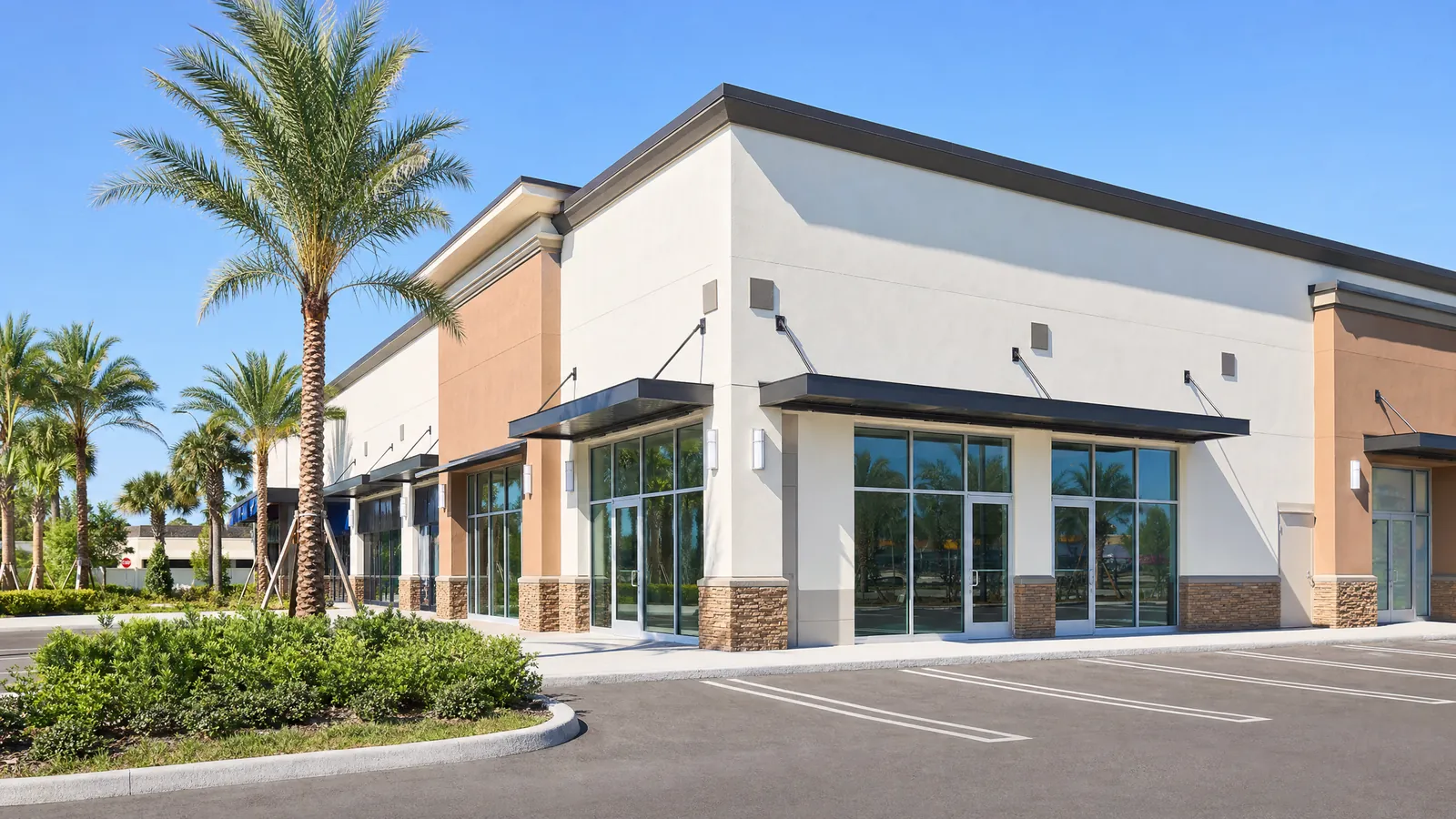
Does your property policy leave your business paying a large share after a hurricane, flood, or roof loss? Start with four answers: Is wind included or excluded? What deductible applies and what event triggers it? Is flood covered separately for both the building and its contents? How long can business-income and extra-expense payments continue after a covered loss? Those answers matter as much as the premium when a damaged roof stops sales, inventory is destroyed, or a location cannot reopen.
The Florida property coverage checks that matter most
Wind and hurricane damage
Wind may be included, limited, or excluded depending on the policy, property, and location. Do not assume the ordinary deductible applies. Ask whether there is a wind, named-storm, or hurricane deductible; what event activates it; and whether it is a fixed dollar amount or a percentage of the insured value. If it is a percentage, convert it to dollars before choosing the policy so the business can plan for the amount it would have to fund after a storm.
If wind is excluded, ask which wind-only option is actually available for the property. For example, Citizens offers commercial wind-only policies in certain parts of Florida when eligibility requirements are met; it also offers commercial policies for owners who cannot find private-market coverage and meet its underwriting criteria. [1]
Flood is a separate decision
Flood damage is usually outside a standard commercial property policy. The National Flood Insurance Program (NFIP) can provide separate commercial building and commercial personal-property coverage, up to $500,000 for each type of policy. It does not cover financial loss from business interruption or loss of use. [2]
Compare the building limit, contents limit, deductible, covered locations, and any private-flood option before a storm is approaching. FEMA says an NFIP policy typically has a 30-day waiting period before it takes effect, subject to limited exceptions. [3] Flood coverage protects only the losses the flood policy actually covers; it does not make an excluded property-policy income claim payable.
Roof age, condition, and loss settlement
There is no universal 10- or 15-year Florida commercial-roof cutoff. Insurers may consider roof type, age, condition, repair history, wind features, and inspection results. Before relying on a quote, confirm whether the roof is settled at actual cash value or replacement cost, whether a roof limitation or separate deductible applies, and whether repairs, replacement, or an inspection are a condition of coverage.
Florida’s statutory rules on certain hurricane and roof deductibles distinguish personal residential and commercial residential policies; they should not be treated as a uniform rule for every office, store, warehouse, or other commercial property. [4] The policy’s declarations and endorsements control the terms for the insured building.
Match the policy to what your business owns and how it earns income
An owner may need building coverage, while a tenant may need coverage for business personal property—such as equipment, furniture, and inventory—and for improvements the tenant made to the space. A policy may also include or offer business income and extra expense. Each coverage applies only when the loss results from a covered direct physical loss and remains subject to the policy’s limits, deductible, valuation terms, and exclusions.
Ask what causes of loss form applies. Basic and broad forms cover named events; special form generally covers direct physical loss unless an exclusion or limitation applies. Flood, wear and tear, and other exclusions can still matter even on special form. [5] This distinction is practical: a lower-priced policy may leave an important cause of loss outside the protection that keeps your equipment, stock, or premises producing revenue.
Keep cash flow in the recovery plan
Business income coverage, also called business interruption coverage, can help with lost net income and certain continuing expenses when covered property damage suspends operations. Extra-expense coverage can help pay additional reasonable costs to keep operating or resume sooner. Review the waiting period, period of restoration, payroll treatment, extra-expense limit, and civil-authority terms. Business-income coverage normally requires covered physical property damage; it does not turn an excluded flood loss into a covered income loss. [6]
Set limits and deductibles for the loss you could actually absorb
Actual cash value (ACV) generally pays replacement cost less depreciation. Replacement cost value (RCV) generally pays current repair or replacement cost when the policy’s conditions are met. For a building, use a current rebuilding estimate—not its market sale value—to test the limit. Update equipment, inventory, and tenant-improvement limits as the business changes. [5]
Also read the coinsurance provision. Coinsurance can require a specified amount of insurance relative to the property’s value and can reduce a claim payment if the required value is not carried. Ask whether the policy has coinsurance, what value it requires, and whether an agreed-value endorsement changes that calculation. Florida law requires a coinsurance clause to be clearly identifiable and provides notice requirements for property policies using one. [4]
A deductible trades premium cost for retained risk. Compare policies with the same limits, causes of loss, wind terms, roof terms, and business-income duration—not price alone. A 5% wind deductible on a high building limit can be far more cash than the ordinary deductible shown on the quote.
Related coverage
Explore Commercial Coverages
Compare competitive pricing and meaningful protection for the way your business works, with Ellie on your side.
Review after changes—not only at renewal
Review coverage when you renovate, add a location, change occupancy, buy major equipment, materially increase inventory, or sign a new lease or loan. A lease or lender may require particular limits, deductibles, or proof of insurance; those are contractual requirements to check alongside the protection the business needs. Consider ordinance-or-law coverage as well if rebuilding to current code could add costs after a covered loss. 5
How Ellie helps compare Florida property protection
Ellie Insurance Group helps Florida property owners and tenants compare the protection behind the headline premium. Ellie offers extremely competitive pricing and access to industry-focused insurance programs, then compares how wind deductibles, flood options, roof terms, valuation, building and contents limits, and business-income coverage fit the way the company operates. That makes it easier to choose protection for the contracts, equipment, inventory, and income the business depends on—and to revisit those choices when the property or business changes.
Related Commercial Insurance Pages
FAQs
Does Florida commercial property insurance cover hurricane damage?
It may, but do not assume it does. Confirm whether wind or hurricane damage is included, excluded, or subject to a separate wind, named-storm, or hurricane deductible. Flood damage associated with a hurricane is commonly addressed under a separate flood policy, not the commercial property policy.
Is flood insurance included in a standard commercial property policy in Florida?
Usually not. Compare separate NFIP and private-flood options for both building and contents coverage. NFIP commercial coverage does not include business interruption, and an NFIP policy typically has a 30-day waiting period before it starts. 2 3
How does roof age affect commercial property insurance in Florida?
Roof age is one factor, not a universal Florida commercial cutoff. Review the roof’s condition, inspection requirements, loss-settlement basis, deductible, and any limitation or repair requirement in the actual policy.
What is the difference between Actual Cash Value (ACV) and Replacement Cost Value (RCV) for commercial property?
ACV generally pays replacement cost minus depreciation. RCV generally pays current repair or replacement cost when its policy conditions are met. Compare both with the building’s current rebuilding cost and the cost to replace the equipment and inventory that allow the business to operate. 5
Why is business income coverage important for Florida businesses?
It can help replace lost net income and pay certain continuing expenses while a covered physical loss suspends operations. Its duration, waiting period, exclusions, and coverage for wind or flood should be confirmed before a loss. 6
Instant Quote
Compare the wind, flood, roof, and income-loss terms that can change your recovery after a Florida property loss. Start with an Instant Quote from Ellie Insurance Group. Existing Ellie customers with a policy question or storm-damage report can call 813-582-5215 or email quote@ellieinsurancegroup.com; a quote request is not required for help.
Sources
Policy wording, endorsements, declarations, and current insurer requirements control. Verify any state-specific requirement with the appropriate state agency.
Put Ellie on your side
Ellie gives your business access to industry-focused programs and highly competitive pricing. We help you compare what you pay with the protection you are buying, and stay in your corner after you buy. Explore the related coverage options or let us help with your business.
About the author
Licensed Business Insurance Agent · Ellie Insurance Group
Licensed business insurance agent at Ellie Insurance Group · Access to 100+ carrier markets.
More about KevinKeep reading
Related Articles
State requirements
Commercial Flood Insurance in Florida: Building, Contents and Income Protection
is the coverage to examine when storm surge, overflowing water, heavy runoff, or mudflow could damage the building, stock, equipment or furnishings that keep your business operating. Most standard business-property…
State requirements
Florida Commercial Property Insurance: Hurricane Prep and Wind Deductibles Explained
A hurricane can leave a Florida business with a damaged building, spoiled inventory, missed sales, and a large deductible due before property coverage pays. The practical answer is to review the policy before a storm…
Industry guides
Dealer Inventory Insurance for Hail, Wind and Flood Losses
Hail, wind, or flood can damage a sale-ready lot in hours—leaving a dealership with reconditioning costs, impaired inventory value, and floor-plan obligations that do not pause after a storm. The practical answer is to…
Next step
Competitive pricing. An insurance team in your corner.
Take advantage of Ellie's industry-focused programs and competitive market access. Let us help you find coverage for the way you work, compare the real protection behind the price, and support your business after you buy.