Skip to main content
Monday–Friday · 9:00 AM – 5:00 PM ET·independent · Insuring businesses nationwide

Commercial Property Insurance for Florida Businesses
Commercial property reviewed for wind, roof, flood, and Florida-specific exposures.
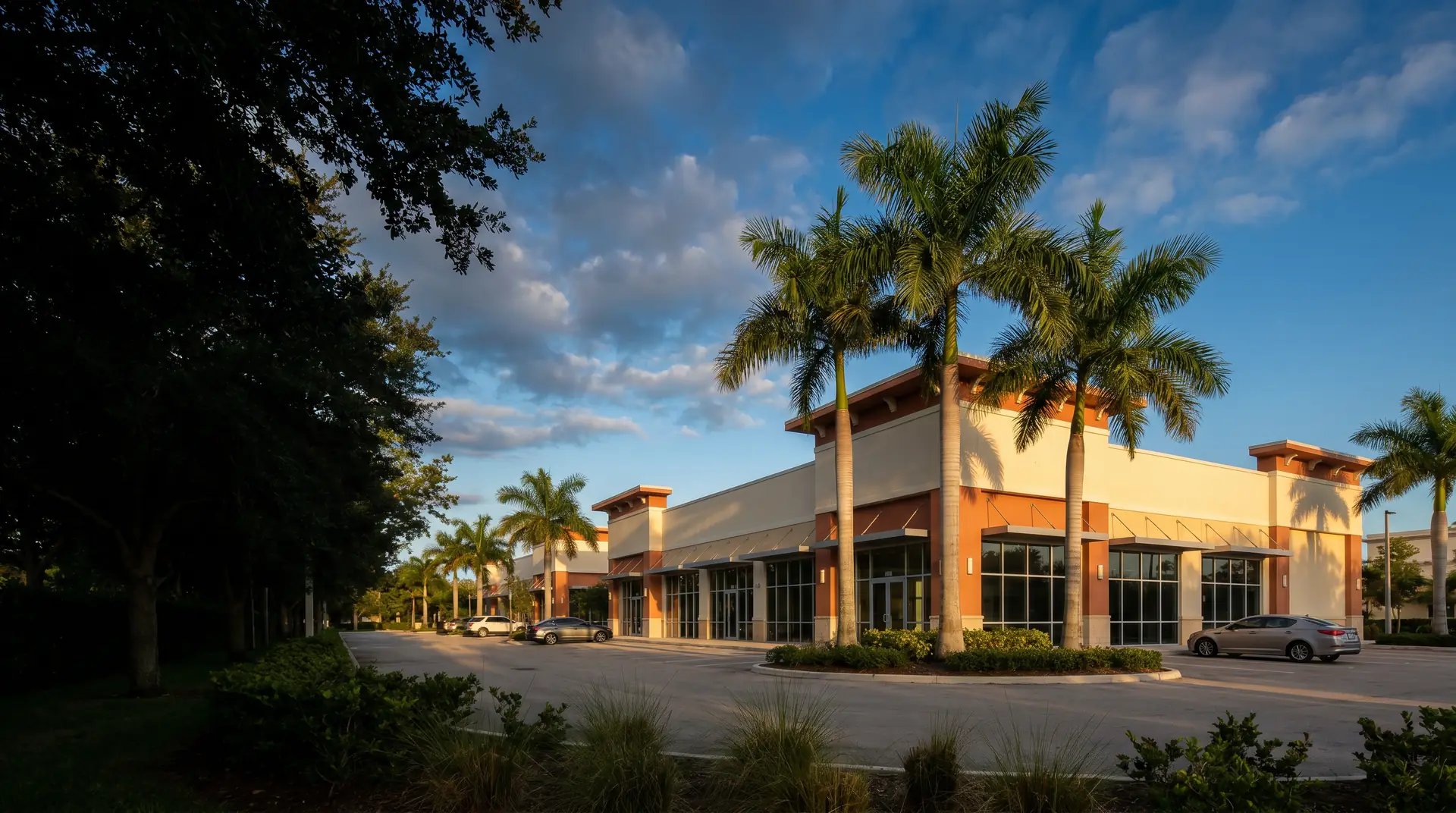
Commercial property insurance helps protect the buildings, contents, equipment, and business income that a Florida business depends on. Florida property accounts are reviewed by carriers in detail because the state experiences hurricane wind, named storms, hail, fire, theft, water damage, and other property losses that affect underwriting decisions and pricing.
At a Glance
- Form
- Special / All-Risk
- Valuation
- Replacement Cost
- Business income
- 12–24 months
- Best for
- Owners & tenants
Quick answer
Commercial property insurance protects the physical assets a business owns or leases — buildings, equipment, inventory, furniture, and tenant improvements — against fire, theft, wind, and other covered perils, and can include business income coverage for revenue lost after a covered loss. Ellie Insurance Group is an independent agency based in Tampa, Florida that shops 100+ carrier markets, including specialty wind and E and S markets, to place property with Florida-appropriate hurricane deductibles and replacement-cost valuation. As an independent broker we compare real quotes side by side; start an Instant Quote and a licensed agent shops your property for you.
Who needs this
Who needs commercial property in Florida
Owners of Florida commercial buildings
Office, retail, industrial, mixed-use, restaurants, hospitality, warehouses — building coverage is the foundation.
Tenants improving their space
Tenant improvements, fixtures, signage, and certain build-outs the tenant paid for are usually the tenant's property to insure.
Restaurants and retail with significant inventory
Inventory, kitchen equipment, refrigeration, and contents at risk daily — spoilage and equipment breakdown should be reviewed.
Equipment-heavy operations
Production equipment, restaurant kitchens, medical/dental, and contractor shops typically carry concentrated property values.
Multi-location and portfolio owners
Blanket property limits across schedules of locations help simplify coverage for landlords and operators with several Florida buildings.
Lenders, landlords, and lease compliance
Many Florida leases and loans require specific property limits, named-storm wording, replacement cost, or business income limits before close.
What it covers
What Commercial Property covers
- Building
Structure, fixed equipment, permanently installed signs and fences — replacement cost basis preferred.
- Business Personal Property (BPP)
Inventory, furniture, fixtures, electronics, and supplies owned by the business.
- Tenant Improvements & Betterments
Improvements made to leased space at the tenant's expense.
- Business Income & Extra Expense
Lost net income and necessary expenses to keep operating after a covered loss.
- Equipment Breakdown
Mechanical/electrical breakdown of permanent equipment — often added by endorsement.
- Ordinance or Law
The extra cost of rebuilding to current building code after a covered loss.
- Debris Removal & Pollutant Cleanup
Sub-limits for clearing debris and limited pollutant remediation after a covered loss.
What it doesn't cover
What Commercial Property won't cover
- Flood (separate NFIP or private flood policy)
- Earthquake (separate or by endorsement)
- Wear, tear, deterioration, and faulty maintenance
- Mold, except limited amounts after a covered loss
- Sewer backup unless endorsed
- Acts of war and nuclear hazard
- Property in transit and off-premises (covered by Inland Marine)
- Auto physical damage (covered by Commercial Auto)
Cost drivers
What drives commercial property pricing
Construction & age
Masonry / non-combustible buildings are cheaper than frame. Older roofs and electrical raise rates.
Location & catastrophe exposure
Coastal wind, hail belts, and wildfire zones drive much of the premium variance.
Protection class
Distance to hydrant and station + sprinkler/alarm protection unlock significant credits.
Occupancy
Restaurants, woodworking, and certain manufacturing rate higher; offices rate the lowest.
Limit & coinsurance
Insuring to value avoids coinsurance penalties; agreed value waives the calculation.
Deductibles
AOP deductible plus separate wind/hail and named-storm deductibles in catastrophe-prone states.
Quote checklist
What we'll need to quote property
- Property address(es) and square footage
- Year built, construction type, roof age, updates (plumbing/electrical/HVAC)
- Building & BPP limits, business income needs
- Protection class (hydrant, station, alarms, sprinkler)
- Hurricane / wind zone information
- 5-year property loss history
- Existing declarations page if any
- Photos of building exterior and any high-value contents
Buying, leasing, or refinancing a Florida commercial property?
FAQ
Frequently Asked Questions
- Commercial property can cover the building, business personal property, equipment, inventory, signage, tenant improvements, and business income depending on the policy. It can include named perils such as fire, certain wind, hail, and theft, or use special form wording that responds to perils that are not specifically excluded. Endorsements may add equipment breakdown and ordinance or law coverage.
- Many Florida businesses need commercial property because a lender, landlord, lease, contract, or operation requires it. Property owners need it for the building, while tenants need it for owned contents and tenant improvements. Multi-location businesses, restaurants, retailers, contractors, and warehouses all rely on this coverage.
- Standard policies often exclude or limit flood, certain wind in some areas, earth movement, war, wear and tear, mechanical breakdown without an endorsement, certain mold or fungus claims, and intentional loss. In Florida, flood and certain wind exposures may need separate or specialty placements. Reviewing the exclusions and endorsement schedule with an agent is important because the exclusion section can change how a policy responds.
- Pricing depends on construction, year built, roof age and material, square footage, occupancy, protection class, distance to coast, prior claims, and the limits requested. Florida property accounts may also be affected by hurricane history, named-storm exposure, and flood zone. Carrier appetite varies, and a complete underwriting file helps the carrier release reliable terms.
- Most submissions include the legal business name, address, building description, year built, square footage, construction type, roof age, occupancy, prior insurance, claims history, requested coverage limits, and lender requirements if applicable. Photos of the building, roof, and contents can also help the carrier review the account.
- Yes. Ellie Insurance Group works with access to 100+ carrier markets, which can be useful when an account has older roofs, certain construction types, prior claims, or a coastal exposure. Some carriers focus on small office or retail buildings while others handle larger portfolios, restaurants, manufacturing, or hospitality risks.
- Yes. Ellie Insurance Group serves Tampa, Brooksville, and businesses across Florida, where wind, roof, and flood considerations factor heavily into commercial property terms. The agency is also licensed in TX, NC, SC, GA, NM, and UT for owners with property in more than one state.
Keep reading
Explore related coverage
Business Owners Policy
Bundle GL + Property at a discount.
Flood Insurance
Flood is separate — required in many zones.
Builder's Risk
Property coverage during construction.
Commercial Property Owners
Programs for owners and landlords.
Inland Marine
Equipment off-premises or in transit.
Business Income & Extra Expense
Lost income when a covered loss shuts you down.
Wind / Named-Storm Coverage
How wind, hurricane, and named-storm deductibles work.
Glass & Plate Glass
Storefront glass, lettering, and frames.
Ordinance or Law
Rebuild-to-code gap after a covered loss.
Equipment Breakdown
Mechanical and electrical breakdown property excludes.
Umbrella Liability
Stacks over Property's liability portion.
Commercial Property Cost Guide
What does commercial property cost? Building factors, rates, and savings tips.
Sources
Authoritative references
- IRMI — Commercial Property Policy (definition)
- Insurance Information Institute — Small Business Insurance Basics
Coverage descriptions and regulatory figures on this page are general summaries reviewed against the references above and are not a statement of coverage, legal advice, or a guarantee of eligibility or price. Last reviewed . Requirements and policy terms change — always confirm current rules with the relevant agency and verify coverage against the actual policy and a licensed agent.
Related articles
Deeper reading on this coverage
Carrier access
Access to 100+ A-rated commercial markets
As an independent agency we shop 100+ admitted and surplus-lines carrier markets — so the carrier competes for your business, not the other way around.




































+75 more
Next step
Start an Instant Quote for commercial property
Send the building address, year built, square footage, construction, roof age, occupancy, prior insurance, claims history, and requested limits, and an Ellie agent can shop available carrier options on your behalf. Photos and lender requirements help the carrier review faster.