Skip to main content
Monday–Friday · 9:00 AM – 5:00 PM ET·independent · Insuring businesses nationwide

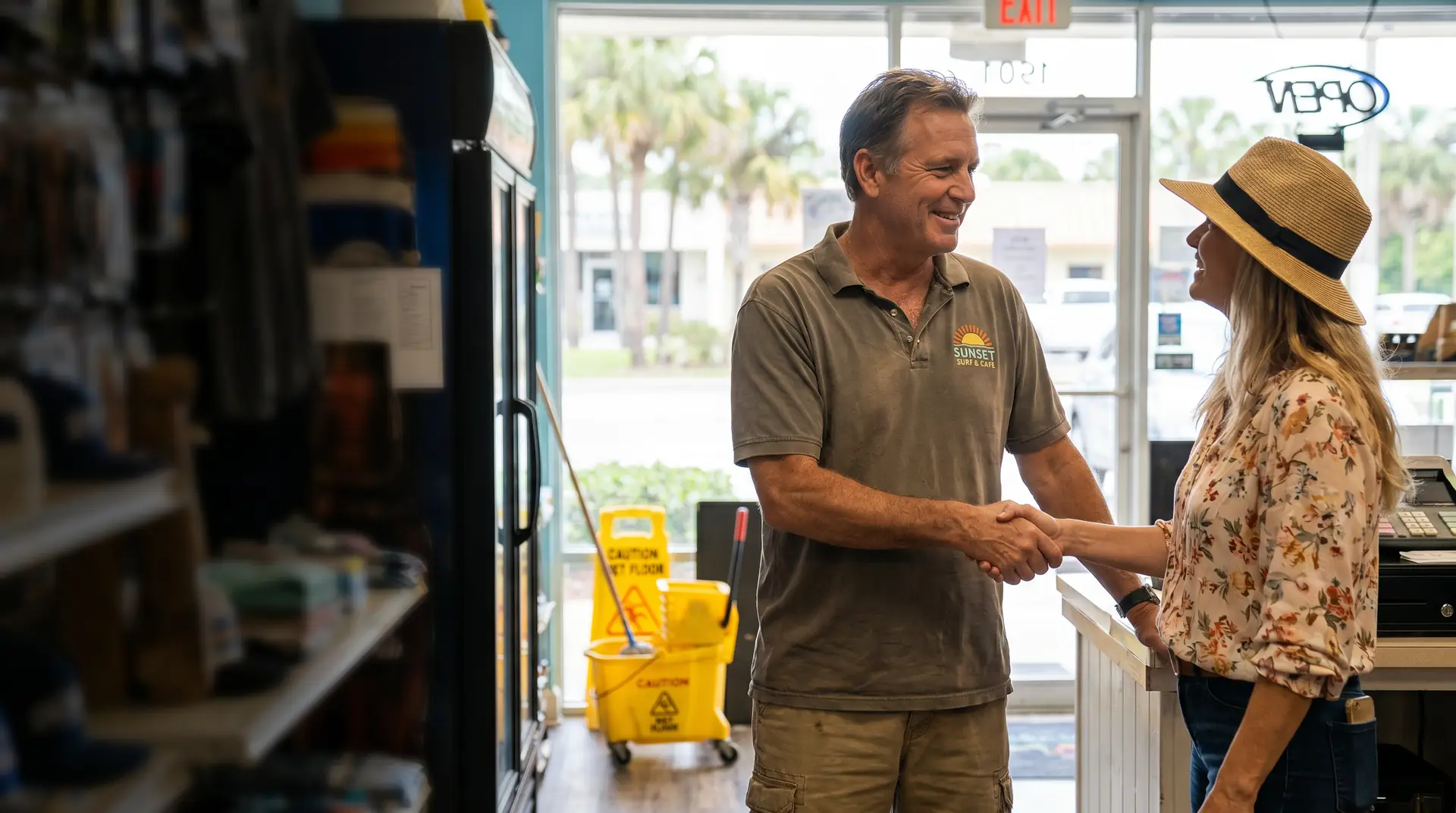
General Liability Insurance for Florida Businesses
General liability built around the contracts and exposures your business actually faces.
General liability helps protect a business when everyday operations lead to injury, property damage, or certain reputation-related claims. For many Florida businesses, it is the first policy a landlord, client, general contractor, lender, vendor, or event organizer asks to see before work can begin.
At a Glance
- Typical limits
- $1M/$2M – $2M/$4M
- Best for
- Almost every operation
- Often bundled with
- Property (BOP)
- Quote response
- instant
Quick answer
Commercial general liability (GL) insurance covers third-party bodily injury, property damage, and personal/advertising injury claims arising from your business operations, premises, products, or completed work — the coverage most contracts, landlords, and clients require before you can begin work. Ellie Insurance Group is an independent agency based in Tampa, Florida that shops 100+ carrier markets to place GL on a $1M/$2M basis with the additional-insured and waiver-of-subrogation wording jobs demand. As an independent broker we compare real quotes side by side; start an Instant Quote and a licensed agent shops your GL for you.
Who needs this
Who needs Commercial General Liability
If your operation interacts with customers, vendors, or third-party property in any way, GL is the table-stakes policy underwriters and contracts expect to see.
Operations open to the public
Retailers, restaurants, salons, fitness studios, and any storefront serving customers in person.
Contractors and trades
Every trade — from handymen to general contractors — needs GL to bid jobs and pull permits.
Service businesses on client sites
Cleaning, IT, AV, repair, installation, and field services performing work in client offices or homes.
E-commerce and product sellers
Products liability is a key sub-line of GL — important for anyone selling physical goods.
Professional and creative firms
Even fully remote firms need GL for client meetings, premises liability, and personal/advertising injury exposure.
Landlords and property owners
Premises liability for tenant injuries and visitor incidents at commercial properties.
What it covers
What Commercial General Liability actually covers
- Third-party bodily injury
Customers, visitors, or members of the public injured because of your operations, premises, or completed work. Includes medical costs, lost income, and pain & suffering.
- Third-party property damage
Damage your business causes to property that belongs to someone else — a contractor damaging a homeowner's floor, a service tech breaking a client's equipment.
- Personal & advertising injury
Libel, slander, copyright infringement in advertising, wrongful entry, and similar 'soft' liability claims arising from how you market.
- Products & completed operations
Claims arising from products you sold or work you completed — a defective product injures someone, or completed work damages property later.
- Legal defense costs
Carrier-funded defense costs paid in addition to your limits — including attorney fees, court costs, and investigation expenses.
- Medical payments
No-fault medical reimbursement (typically $5K–$25K) for minor injuries on your premises — designed to resolve small incidents before they become lawsuits.
- Additional insureds & waivers
Blanket additional insured and waiver of subrogation endorsements added wherever the carrier permits, so contract requirements are met automatically.
What it doesn't cover
What GL typically won't cover
- Damage to your own building, tools, or inventory — covered by Property and Inland Marine
- Employee injuries — covered by Workers' Compensation
- Auto liability arising from owned, hired, or non-owned vehicles — covered by Commercial Auto / HNOA
- Professional mistakes that cause financial loss — covered by Professional Liability (E&O)
- Faulty workmanship in completed work — typically excluded or limited via specific endorsements
- Pollution incidents — usually excluded; environmental coverage is a separate line
- Cyber events, data breaches, and ransomware — covered by Cyber Liability
- Employment practices claims like discrimination or harassment — covered by EPLI
- Liquor liability for businesses serving alcohol — covered by Liquor Liability
- Punitive damages in many states, and intentional acts
Cost drivers
What drives the price of General Liability
Industry classification
Class codes drive the base rate. The wrong code is the #1 reason GL is over-priced.
Revenue or payroll
Most class codes are rated per $1,000 of revenue or per $100 of payroll — so growth directly raises premium.
Prior losses
Open or recent claims add surcharges quickly. Three clean years of loss runs help a lot at renewal.
Limits and aggregates
Moving from $1M/$2M to $2M/$4M is usually 15–30% more — not double the price.
Sub-contracted work
Contractors using subs without certificates pay materially higher GL. Sub warranty endorsements are critical.
Operations and territory
Specific exposures (roofing, demolition, hot work, certain geographies) raise the rate.
Quote checklist
What we'll need to quote GL
- Legal business name, FEIN, and years in operation
- Description of operations and primary services
- Annual revenue (current year and prior year)
- Total payroll, broken out by role or trade
- Subcontractor expense and certificate practices
- Loss runs for the prior 3–5 years
- Required limits and any specific contract language
- Current GL declarations page if you have an active policy
Have a contract or certificate request driving GL?
FAQ
Frequently Asked Questions
- General liability insurance commonly covers third-party bodily injury, third-party property damage, products-completed operations, and certain personal or advertising injury claims. It can also include defense for covered claims, which may be important even when the business disputes the allegation. The exact response depends on the policy form, endorsements, exclusions, and facts of the loss.
- Many Florida businesses need general liability because a lease, contract, job site, vendor agreement, or client requires it. It is common for contractors, restaurants, retailers, offices, real estate investors, cleaning companies, repair businesses, and other service operations. Even businesses without walk-in customers may need it if employees visit client sites, attend events, deliver products, or work around other people's property.
- General liability usually does not cover employee injuries, business-owned vehicles, damage to your own property, professional service allegations, cyber incidents, or intentional acts. Some exclusions are broad, while others depend on the class of business or endorsement wording. A business owner should review exclusions before relying on the policy for a contract or job.
- Pricing depends on the business class, payroll, sales, subcontractor cost, location, job type, product exposure, prior claims, and contract requirements. Carriers also consider how the business manages risk, including written agreements, certificate collection, employee training, and premises controls. Accurate estimates matter because many policies can be audited after the term.
- Ellie typically needs the business name, operations description, locations, annual sales, payroll, subcontractor cost, prior insurance, claims history, and any contract wording that must be satisfied. Contractors may need to provide trade details, job types, subcontractor controls, and sample certificate requirements.
- Yes. Ellie Insurance Group works with access to 100+ carrier markets and can shop options on your behalf when the business fits underwriting appetite. Florida is the agency's home market, and the agency is also licensed in TX, NC, SC, GA, NM, and UT for owners with multi-state needs.
- Yes. Ellie Insurance Group serves businesses in Tampa, Brooksville, and across Florida. The agency is rooted in Florida and reviews coverage in the context of common Florida contract requirements such as additional insured, primary and noncontributory wording, and waiver of subrogation.
Keep reading
Explore related coverage
Business Owners Policy
Bundle GL with property at a discount.
Umbrella / Excess Liability
Add $1M–$10M+ over your underlying limits.
Professional Liability (E&O)
Covers financial harm from professional work.
Workers' Compensation
Statutory coverage for employee injuries.
Commercial Auto
Vehicles used in the business need separate auto coverage.
Contractor Insurance
Trade-specific GL programs with certificate support.
Additional Insured
Adding a GC, landlord, or client to your GL policy.
Primary & Non-Contributory
Making your policy pay first when a contract requires it.
Waiver of Subrogation
Giving up your insurer's recovery right against a named party.
Per-Project Aggregate
A separate GL aggregate limit for each construction project.
GL Insurance Cost Guide
What does general liability cost? Rates, factors, and savings tips.
Sources
Authoritative references
- IRMI — General Liability Insurance (definition)
- IRMI — Commercial General Liability (CGL) Policy
- Insurance Information Institute — Small Business Insurance Basics
Coverage descriptions and regulatory figures on this page are general summaries reviewed against the references above and are not a statement of coverage, legal advice, or a guarantee of eligibility or price. Last reviewed . Requirements and policy terms change — always confirm current rules with the relevant agency and verify coverage against the actual policy and a licensed agent.
Related articles
Deeper reading on this coverage
Cost benchmarks
General Liability Insurance Cost: Real Benchmarks for 2026
Per-industry GL benchmarks: what contractors, retail, restaurants, and pros really pay — and what drives the price up or down.
Coverage explainers
General Liability vs. Professional Liability: Why You Probably Need Both
GL covers slip-and-fall. E&O covers bad advice. Service firms almost always need both — here's how they differ.
Operations
Certificate of Insurance Guide: What Each Box Actually Means
What every box on an ACORD 100+ actually means — and what to ask for when a vendor or GC requests one.
Operations
Business Insurance Checklist: A 12-Point Annual Review
A 12-point checklist for a real annual review — not a quote shop.
Carrier access
Access to 100+ A-rated commercial markets
As an independent agency we shop 100+ admitted and surplus-lines carrier markets — so the carrier competes for your business, not the other way around.



































+75 more
Next step
Start an Instant Quote for general liability
A clean submission helps carriers understand the business quickly. Send the operations description, sales, payroll, subcontractor cost, prior insurance, claims history, and any contract wording, and an Ellie agent can shop available carrier options on your behalf.