Skip to main content
Monday–Friday · 9:00 AM – 5:00 PM ET·independent · Insuring businesses nationwide

State requirements
Florida Commercial Property Insurance: Hurricane Prep and Wind Deductibles Explained
How Florida commercial property insurance handles hurricane wind deductibles, named-storm vs all-other-wind, and what to do before a storm.

Licensed Business Insurance Agent
Last reviewed June 2026 7 min read
Key takeaway
Florida commercial property policies treat wind differently from other perils.
Quick Answer: Florida commercial property policies treat wind differently from other perils. They typically split wind into a named-storm deductible and an all-other-wind deductible, and the named-storm deductible is usually a percentage of the building's insured value — commonly 2%, 5%, or 10% — rather than a flat dollar amount. Because that percentage can translate into a large out-of-pocket number, your real protection after a hurricane comes from understanding your deductible, carrying adequate business interruption coverage, and keeping time-stamped pre-storm documentation.
If you own or lease commercial property in Florida, your wind deductible is one of the most important numbers in your business — and most owners only learn it after a storm. Ellie Insurance Group helps owners shop on your behalf for commercial property insurance, comparing 100+ carrier markets so you can see your deductible options clearly before hurricane season, not after.
What Business Owners Need to Know
Florida commercial property coverage is shaped by catastrophe risk in ways that property owners in other states rarely face. The most consequential feature is the separate wind deductible. Most policies divide wind losses into two categories: a named storm (a tropical storm or hurricane that the National Hurricane Center has named) and all other wind (everyday thunderstorms and non-named events). The named-storm deductible is typically expressed as a percentage of the insured building value and applied per occurrence, while all-other-wind usually uses a smaller flat deductible. Knowing which one applies — and what percentage you agreed to — is the difference between a manageable claim and a painful surprise.
A percentage deductible scales with your building value, which is why it matters so much. A 5% named-storm deductible on a building insured for $2,000,000 is a $100,000 deductible before the policy pays anything for that storm. Many owners select a higher percentage to lower premium without fully appreciating the out-of-pocket exposure that creates. Reviewing the deductible in dollar terms — not just as a percentage — is the single most useful thing you can do before a storm.
The second thing owners underestimate is business interruption (BI). After major Florida storms, the businesses that recovered were frequently the ones whose BI coverage replaced lost income while they were closed for repairs. The common mistake is setting BI limits using last year's actuals or a few months of revenue. A more realistic approach is to model a worst-case period — up to a full 12 months of gross revenue and continuing expenses — because severe storms can extend closures well beyond a few weeks when contractors and materials are scarce.
The third factor is documentation, which quietly decides disputed claims. Time-stamped, pre-storm photos and inventory records make it far easier to prove what existed and its condition before the loss. Ellie Insurance Group is an independent agency serving commercial owners statewide, and it can help you structure both the policy and the documentation habits that pay off after a storm.
Coverage Details and Common Mistakes
The table below summarizes the moving parts of a Florida commercial property program and the mistakes that most often hurt owners after a hurricane.
| Element | What it does | Common mistake |
|---|---|---|
| Named-storm deductible | Percentage of building value applied to hurricane/tropical-storm losses | Picking a high % without knowing the dollar amount |
| All-other-wind deductible | Flat deductible for non-named wind events | Confusing it with the named-storm deductible |
| Business interruption | Replaces lost income during covered closure | Setting limits on last year's actuals, not a worst case |
| Flood coverage | Covers flood damage (excluded by property policy) | Assuming the property policy covers flood |
| Replacement cost vs. ACV | How the building/contents are valued at loss | Carrying actual cash value and being underpaid |
| Pre-storm documentation | Proves pre-loss condition and inventory | No time-stamped records when a claim is disputed |
The most common and damaging mistake is assuming the property policy covers flood. It does not — flood is excluded from standard commercial property policies, and wind-driven rain and storm surge are treated differently from wind. Owners in flood-prone areas typically need a separate flood policy to be protected, and discovering the gap after a storm is too late.
A second frequent mistake is underinsuring the building or carrying actual cash value (ACV) instead of replacement cost. ACV pays the depreciated value, which can leave a large shortfall on an older building or roof. Replacement cost coverage, kept at an accurate insured value, is what actually rebuilds. A coinsurance penalty can also reduce a claim payment if the building is insured below a required percentage of its value, so the insured value should be reviewed regularly.
A third mistake is treating the wind deductible as fixed. It is a choice. Lowering the percentage raises premium but reduces out-of-pocket exposure; raising it does the opposite. An independent agency can model several deductible scenarios across multiple carriers so you choose the trade-off deliberately. Ellie Insurance Group can run those comparisons through commercial property insurance.
How This Applies in Florida
Florida's wind exposure makes percentage deductibles and named-storm provisions standard rather than optional, and the hard property market in recent years has made both pricing and availability tighter, especially for coastal locations and older roofs. Some national carriers limit what they will write in Florida, while regional and surplus-lines carriers may still offer terms — which is exactly where access to many markets matters, because a single-carrier agent can only present one company's deductible and price.
Storm season also makes timing important. Carriers commonly impose binding moratoriums when a named storm is approaching, meaning you cannot make changes or bind new coverage once a storm is in the cone. The practical implication is that the time to review deductibles, BI limits, flood coverage, and insured values is well before a storm forms — not when one is on the way.
When to Review Your Policy
Review your commercial property coverage every year before hurricane season, and translate your wind deductible into a dollar figure so you know your true out-of-pocket exposure. Confirm your business interruption limit reflects a worst-case closure, verify you carry replacement cost at an accurate insured value, and check whether you need separate flood coverage for your location.
Also review after any change to the building or your operations — a roof replacement, an addition, new equipment, or higher inventory values all change the right insured value. Update your pre-storm documentation annually: photograph each room, major equipment item, and inventory line, and store copies offsite so they survive the loss they're meant to document.
Related Commercial Insurance Pages
| Page | Why it may matter for property owners |
|---|---|
| Commercial Property Insurance | Core building, contents, and wind-deductible coverage. |
| Business Interruption Insurance | Replaces income while you're closed after a covered loss. |
| Business Owners Policy (BOP) | Bundles property and liability for many small businesses. |
| General Liability Insurance | Third-party injury and property-damage protection. |
| Commercial Insurance Overview | Full menu of commercial coverages to coordinate. |
FAQs
How does a Florida hurricane deductible work?
It's usually a percentage of the building's insured value applied per named storm — commonly 2%, 5%, or 10% — rather than a flat dollar amount. On a $2M building, a 5% deductible is $100,000 before the policy pays for that storm.
What's the difference between named-storm and all-other-wind?
A named storm is a tropical storm or hurricane named by the National Hurricane Center, and it triggers the percentage deductible. All-other-wind covers everyday wind events like thunderstorms and typically uses a smaller flat deductible.
Does commercial property insurance cover flood?
No. Flood is excluded from standard commercial property policies. Owners in flood-prone areas need a separate flood policy, and storm surge in particular is treated as flood, not wind.
How much business interruption coverage should I carry?
Many advisors suggest modeling a worst case — up to 12 months of gross revenue and continuing expenses — because severe storms can extend closures far beyond a few weeks when contractors and materials are scarce.
Can I change my coverage right before a storm?
Often not. Carriers commonly impose binding moratoriums once a named storm is in the forecast cone, so you generally cannot bind or change coverage at the last minute. Review well before storm season.
Why does pre-storm documentation matter?
Time-stamped photos and inventory records prove what existed and its condition before the loss, which helps resolve disputed hurricane claims faster and more favorably.
Instant Quote
Know your wind deductible in dollars, confirm your flood and business-interruption coverage, and do it before the next storm. Ellie Insurance Group can model deductible options and shop on your behalf across 100+ carrier markets. Start with commercial property insurance and choose Instant Quote.
Sources
This guide is general information and is not legal, licensing, tax, or insurance advice. Statutes, thresholds, and licensing rules change; always confirm current requirements with the relevant agency and verify coverage details against the actual policy and a licensed agent.
Working with an independent agent
Coverage needs vary by operation, contract, and state. An Ellie Insurance Group agent can review your situation and shop 100++ carrier markets on your behalf — start an Instant Quote or call 813-582-5215.
Get a real quote
Want a quote for the coverage discussed here? Start with general liability, workers' compensation, or commercial auto — or browse all commercial coverages and industries we serve.
Written & reviewed by
Licensed Business Insurance Agent · Ellie Insurance Group
Licensed business insurance agent at Ellie Insurance Group · Access to 100+ carrier markets.
More about KevinIndependent Agency
100+ carrier markets
5.0★ Google Rating
Verified Google reviews
Trusted Choice 5.0
5-star independent agency
InsuredBetter 5.0
29 verified client reviews
Same-Day Certificates
For active clients during business hours
Instant Commercial Quotes
Most submissions, same business day
Keep reading
Related Articles
State requirements
Commercial Flood Insurance in Florida: What Business Owners Need to Know
Commercial flood insurance in Florida is a critical necessity for businesses, as standard commercial property policies almost universally exclude flood damage. Whether through the National Flood Insurance Program (NFIP)…
State requirements
Florida Commercial Property Insurance: Wind, Flood and Roof Questions
Florida commercial property insurance is vital for businesses, but it comes with unique challenges due to the state’s exposure to wind, hurricane, and flood risks. Understanding how these perils are covered, especially…
Industry guides
How Hail, Wind and Flood Coverage Work for Auto Dealer Inventory
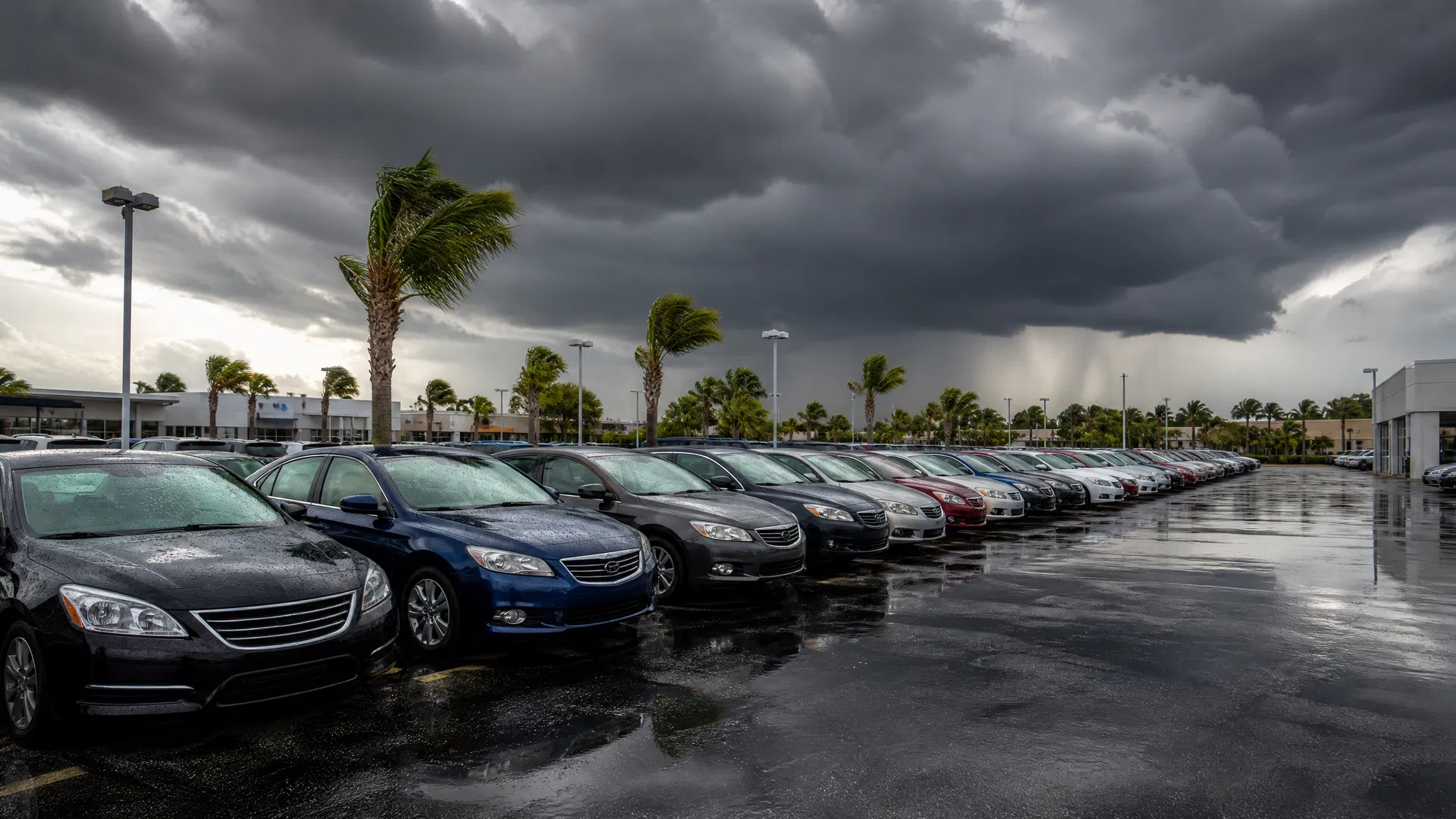
For auto dealers, hail, wind, and flood coverage are critical components of Dealer Open Lot (DOL) insurance, protecting valuable vehicle inventory from severe weather events. While DOL policies typically include these…
Next step
Ready to shop commercial coverage?
Start an instant quote or speak with a commercial agent. We'll review available markets and the carrier's requirements before coverage can be bound.