Skip to main content
Monday–Friday · 9:00 AM – 5:00 PM ET·independent · Insuring businesses nationwide

Licensed Business Insurance Agent
8 min read
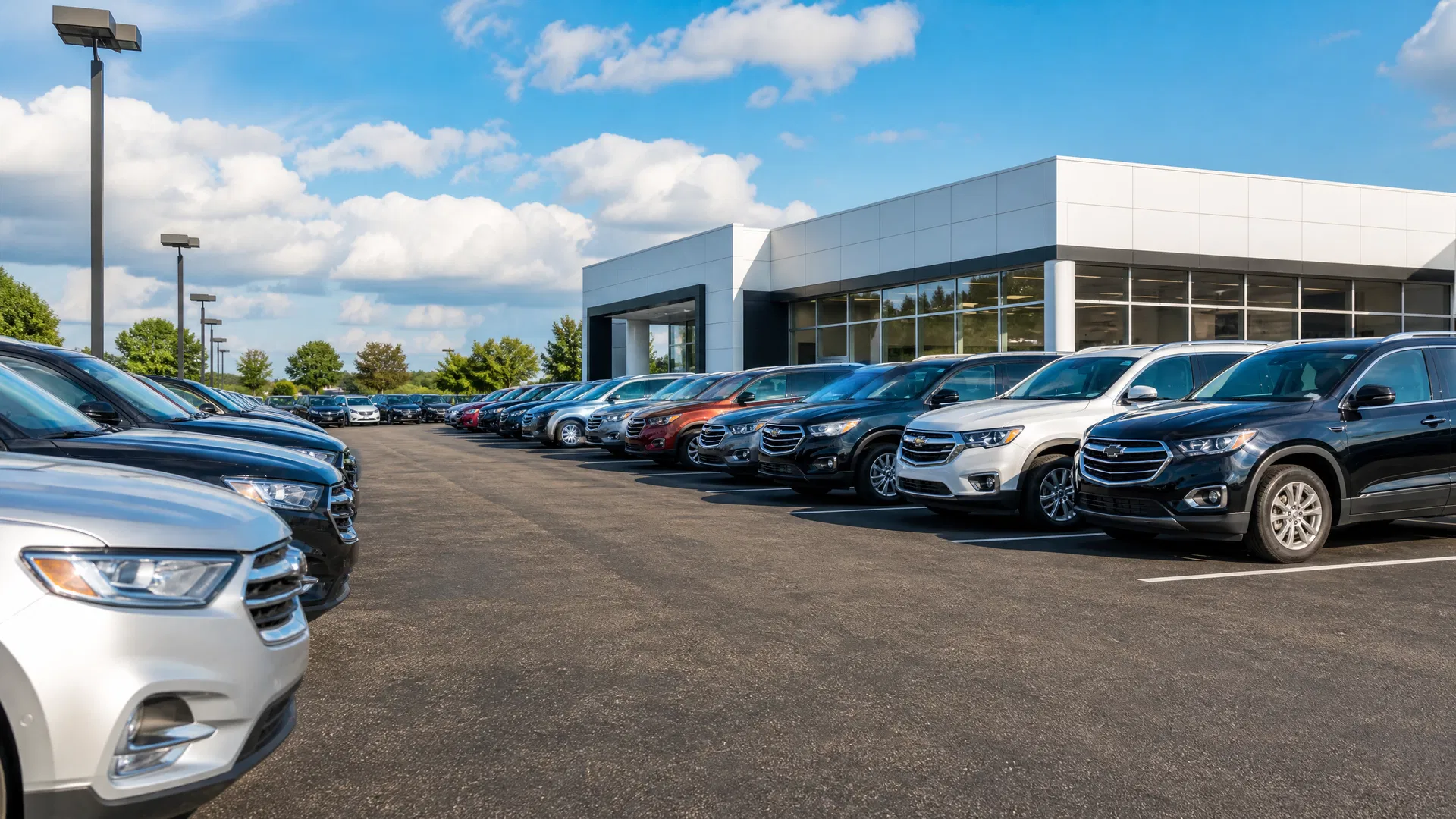
A hailstorm, theft, fire, or collision can take sale-ready vehicles off your lot and tie up the cash your dealership needs to replace inventory. Dealer Open Lot insurance (DOL) is first-party physical-damage coverage for vehicles your dealership owns and holds for sale. It is designed to protect inventory from exposures such as theft, vandalism, and weather damage, but the causes of loss, locations, limits, deductibles, and endorsements on the issued policy determine what protection you actually have.[1]
The practical answer is to buy enough inventory protection for the vehicles and locations you have today, then test the policy against the events that could disrupt sales tomorrow. Do not rely on a coverage name or a low premium alone.
What dealer open lot insurance is for
Your lot inventory is not just property on a balance sheet: it is the merchandise that produces your next sale and may secure a floor-plan loan. DOL is meant for dealer-owned autos held for sale. It is distinct from coverage for your building, tools, business income, liability to others, and customer vehicles.
A dealer open lot form may offer broad auto physical-damage protection. Theft, vandalism, fire, hail, wind, collision, and falling objects are risks worth discussing. Flood, earthquake, transit or driveaway loss, damage away from a scheduled location, and false-pretense or voluntary-parting losses may require particular terms or endorsements. For example, one current dealer program offers flood options and aggregate wind/hail deductibles, with terms that vary by state; that is useful evidence that a policy’s details matter more than assumptions about a generic DOL policy.[1]
Compare the details that affect a loss
Before choosing dealer open lot insurance, work through these questions with the policy or quote in front of you.
1. Will the limit keep up with your inventory?
Compare the limit with the highest realistic value of all dealer-owned units at the location, not only an average month. Higher-value arrivals, seasonal stocking, and a new franchise or vehicle line can push the exposure above the limit quickly.
Ask how a loss is valued and how the policy settles it. The valuation basis, any per-vehicle sublimit, and the total limit affect how much money is available to replace inventory after a large loss. Also ask whether the policy is reporting or non-reporting. A reporting form can require periodic inventory-value reports; a non-reporting form instead uses its stated limit and conditions. Neither label tells you whether the limit matches a peak inventory month. A current dealer program, for example, offers only a non-reporting form, illustrating why this must be confirmed policy by policy.[5]
2. Are all locations and movements included?
List every sales lot, storage yard, overflow site, and repair or preparation location where inventory is kept. Then ask about vehicles being transported, driven between locations, or used as demos, loaners, or for another purpose. A vehicle can be a major asset to the dealership while falling outside the location, use, or transit terms you expected.
3. What would you pay after a weather event or flood?
A deductible is the portion of a covered loss your business pays before insurance responds. For lot losses involving many units, the deductible structure can be as important as the limit. Review whether wind, hail, theft, or flood deductibles apply per vehicle, per occurrence, or on an aggregate basis, and read any wind or hail endorsement. Carrier terms vary; aggregate wind/hail deductibles are one available approach.[1]
For flood exposure, ask specifically whether dealer-owned inventory is covered at each location and what deductible applies. Do not assume a separate commercial flood policy protects licensed vehicles on an open lot. The National Flood Insurance Program’s General Property Form excludes self-propelled vehicles or machines; its narrow exception applies only to vehicles not licensed for public-road use that meet additional conditions.[3]
4. Which gaps should you investigate?
Ask the insurer to show how the form handles employee dishonesty, false pretense or voluntary parting, mechanical breakdown, diminished value after repair, earthquake, and personal or rental use. These are important gaps to investigate, not universal exclusions on every DOL policy. The declarations, coverage form, endorsements, and exclusions control.
5. Is your floor-plan lender’s interest addressed?
If inventory is floor-planned, read the financing agreement instead of assuming what it requires. The agreement may call for property-damage insurance, a stated limit, and lender loss-payee wording. Federal banking guidance specifically contemplates a lender maintaining floor-plan property-damage insurance or requiring the dealer to maintain it with the bank named as loss payee.[2]
Give the lender’s written requirements to your insurance adviser and confirm the issued policy, declarations, and loss-payee documentation address them. This helps avoid a financing problem at the same time you are trying to recover from a property loss.
6. Are customer vehicles handled separately?
DOL is for your dealer-owned inventory. If you service, store, tow, or otherwise hold customer vehicles, ask about garagekeepers legal liability coverage instead. It is designed for damage you are responsible for while a customer’s auto is in your possession; its available limits, deductible, covered locations, and state treatment deserve a separate review.[4]
That distinction protects the customer relationship as well as your balance sheet. Confirm the maximum payable per vehicle and per loss, the deductible, and whether each service, storage, or parking location is addressed. Do not assume an inventory limit will respond to a customer’s vehicle.
Florida storm exposure and loss readiness
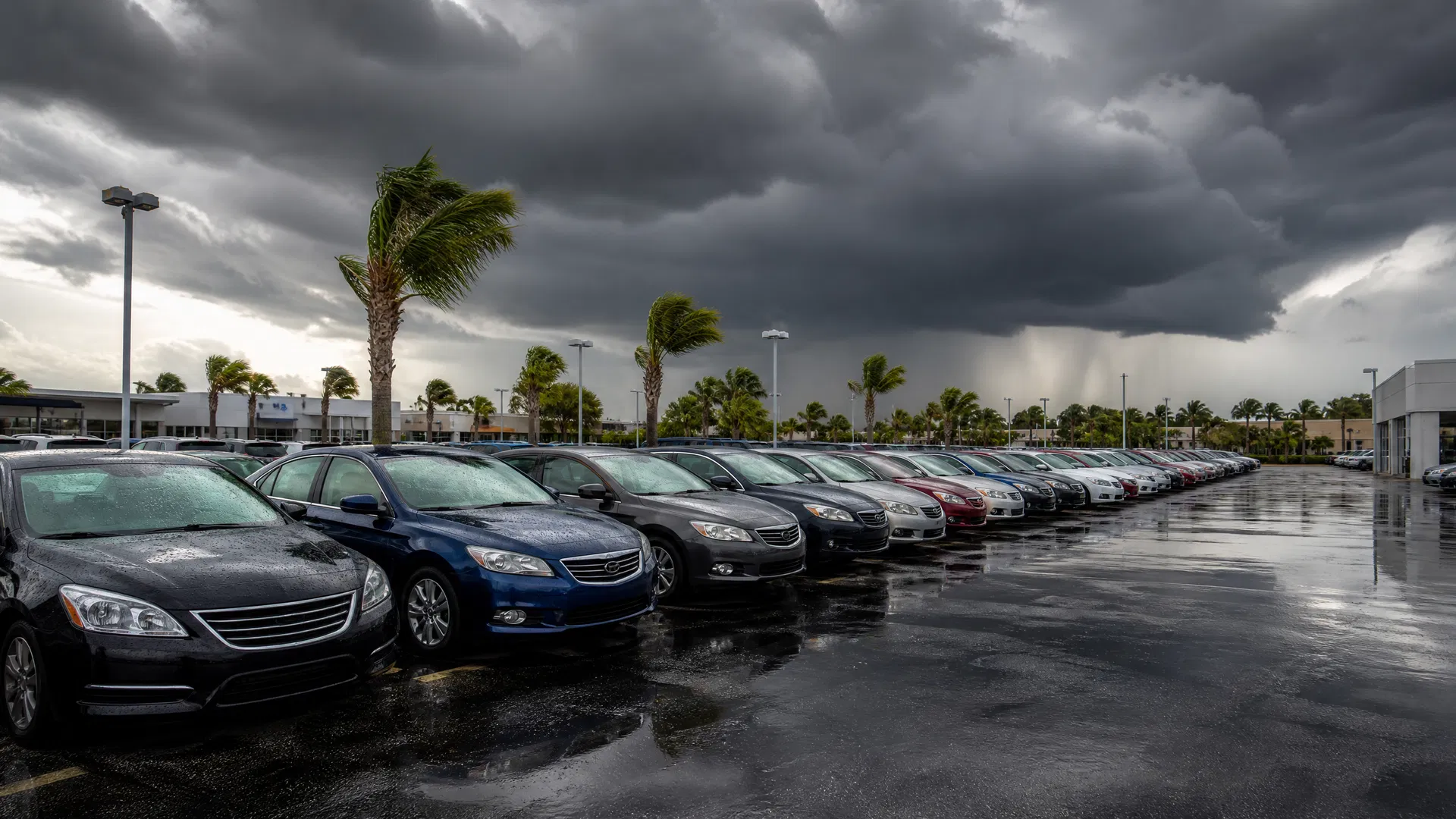
Florida dealers have good reason to focus on wind, hail, and flood terms, but the buying task is the same wherever you operate: identify the policy’s exact deductible and covered-location wording. A hurricane or heavy-rain event can damage many units at once, so compare the likely uninsured share of a large event—not only the annual premium.
Strong lighting, controlled keys, cameras, fencing, and an inventory process can help you prevent theft and document what was present before a loss. Keep dated photographs, stock numbers, VINs, purchase records, and floor-plan records somewhere accessible away from the lot. After a loss, protect property from further damage when safe to do so, document the condition, and promptly follow the carrier’s and lender’s claim instructions. Do not move damaged units except to protect them or when directed.
Related coverage
Explore Commercial Coverages
Compare competitive pricing and meaningful protection for the way your business works, with Ellie on your side.
When to review your dealer open lot policy
Review the policy before renewal and whenever any of the following changes:
- Your inventory value, mix, or seasonal peak changes.
- You add, relocate, or close a sales, storage, or preparation location.
- You begin using demos, loaners, or off-lot storage differently.
- Your floor-plan lender or its insurance requirements change.
- You add or change security measures, or experience a theft, weather event, or near miss.
A short review at these points can reveal an out-of-date limit, a missing location, or a deductible your business cannot comfortably absorb.
How Ellie helps dealership owners
Ellie Insurance Group helps dealers compare dealer open lot options around the issues that make a real difference after a lot loss: inventory limits and valuation, peak values, locations and transit, weather and flood deductibles, lender requirements, and the separation between inventory and customer vehicles. Our industry-focused insurance programs and comparison across multiple markets are built to deliver highly competitive pricing without treating the cheapest premium as the whole decision. We also stay available as inventory, locations, or financing changes so your protection can keep pace with the way the dealership earns revenue.
If you are an existing Ellie customer and need help after a loss or with a lender insurance requirement, call 813-582-5215. Report the claim promptly using the instructions on your policy; Ellie can help you review the information and next steps.
Related Commercial Insurance Pages
FAQs
What is the primary purpose of dealer open lot insurance?
Dealer open lot insurance is first-party physical-damage coverage for dealer-owned vehicles held for sale. It is intended to protect the inventory that supports sales and, in many cases, floor-plan financing. The issued policy determines the covered causes of loss, limits, locations, and deductibles.1
Does dealer open lot insurance cover customer vehicles?
Dealer-owned inventory and customer vehicles are different exposures. If you have customer autos in your care, custody, or control for service, storage, or towing, ask about garagekeepers legal liability and confirm its limits, deductible, and covered locations.4
Are hurricanes and floods covered by dealer open lot insurance?
Do not assume either. Check the policy for covered causes of loss, the location involved, and the wind, hail, or flood deductible. Flood coverage options and wind/hail deductible structures vary by program and state.1 A separate commercial flood policy should also be checked before relying on it for licensed vehicle inventory.3
Why do floor-plan lenders ask about dealer open lot insurance?
A lender may want to protect the inventory securing its loan. Its requirements are contractual, so read the financing agreement for required coverage, limits, and loss-payee wording rather than relying on a general rule.2
How can Ellie Insurance Group help with dealer open lot insurance?
Ellie helps you compare highly competitive dealer open lot options and industry-focused programs based on the details that affect your dealership: inventory values, peak seasons, locations, deductibles, policy gaps, and lender requirements. Start with an Instant Quote to discuss coverage that goes beyond simply meeting a requirement.
Instant Quote
A well-priced dealer open lot policy should also make sense when inventory values rise or one weather event damages multiple vehicles. Instant Quote from Ellie Insurance Group to compare the protection, deductibles, and terms that matter to your dealership.
Sources and policy reminder
Coverage varies by insurer, form, endorsements, declarations, and state. Review the issued policy and any financing agreement for the protection that applies to your dealership.
Put Ellie on your side
Ellie gives your business access to industry-focused programs and highly competitive pricing. We help you compare what you pay with the protection you are buying, and stay in your corner after you buy. Explore the related coverage options or let us help with your business.
About the author
Licensed Business Insurance Agent · Ellie Insurance Group
Licensed business insurance agent at Ellie Insurance Group · Access to 100+ carrier markets.
More about KevinKeep reading
Related Articles
Compliance & renewals
Auto Repair Shop Insurance Checklist
If customer cars are in your bays, a basic liability policy alone may leave important gaps. This auto repair shop insurance checklist helps you separate protection for injuries and third-party damage from protection for…
State requirements
Florida Garage Liability Insurance for Used Car Dealers: 2026 Guide
Florida used-car dealers need protection that does more than satisfy a license filing. A serious test-drive injury, damage to a customer's vehicle, or a loss across the inventory can create an expense that the filing…
Industry guides
Dealer Inventory Insurance for Hail, Wind and Flood Losses
Hail, wind, or flood can damage a sale-ready lot in hours—leaving a dealership with reconditioning costs, impaired inventory value, and floor-plan obligations that do not pause after a storm. The practical answer is to…
Next step
Competitive pricing. An insurance team in your corner.
Take advantage of Ellie's industry-focused programs and competitive market access. Let us help you find coverage for the way you work, compare the real protection behind the price, and support your business after you buy.