Skip to main content
Monday–Friday · 9:00 AM – 5:00 PM ET·independent · Insuring businesses nationwide

Licensed Business Insurance Agent
8 min read
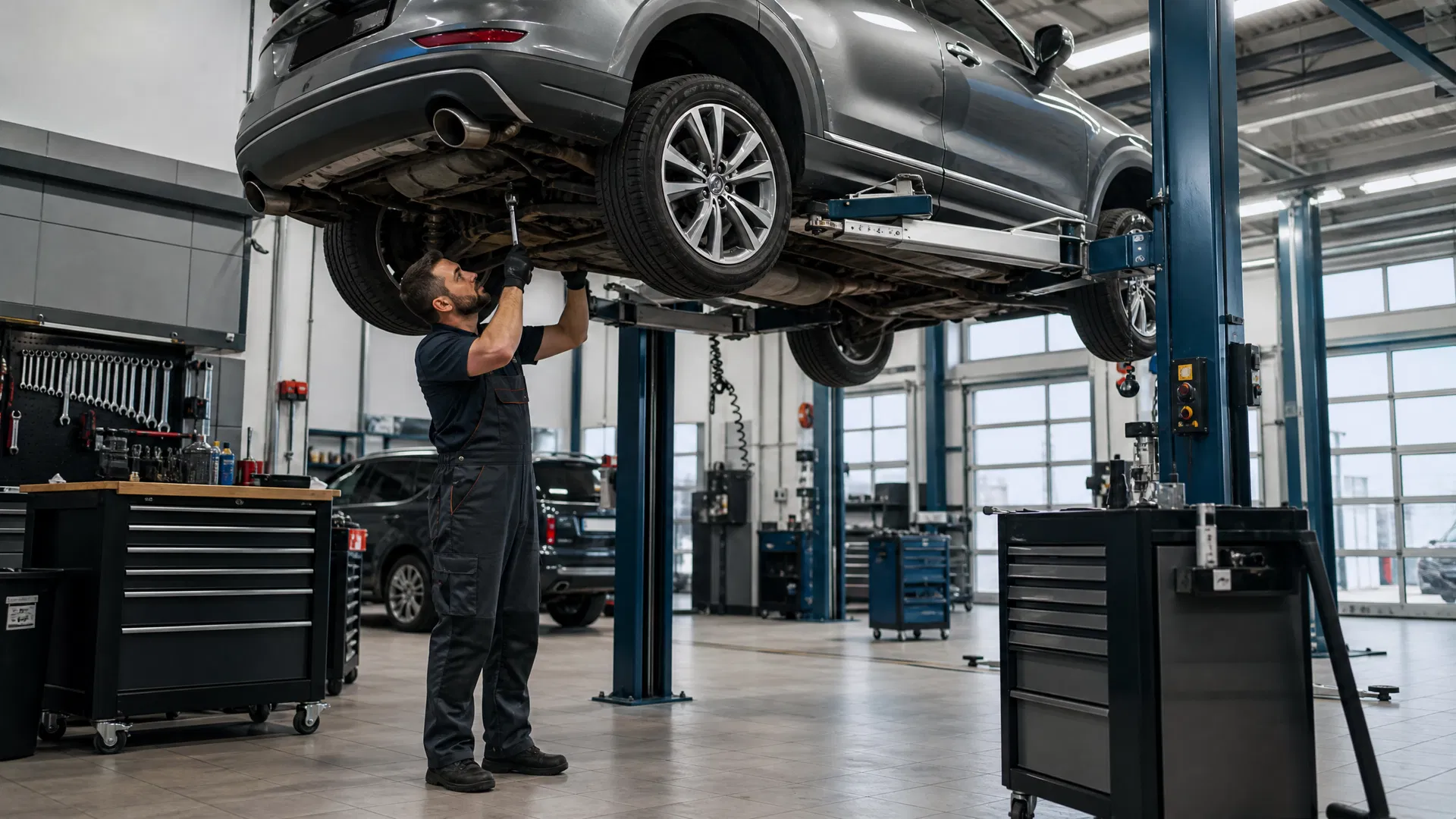
If customer cars are in your bays, a basic liability policy alone may leave important gaps. This auto repair shop insurance checklist helps you separate protection for injuries and third-party damage from protection for customer vehicles, your tools, payroll, and the income your shop needs to keep operating after a covered loss. The practical goal is not to buy every policy name; it is to match the limits, deductibles, and exclusions to the work that earns your revenue.
Start With the Risks That Could Stop Work
An auto repair shop faces more than a typical storefront. A customer vehicle can be damaged while it is parked overnight, a test drive can cause an accident, a fire can put lifts and diagnostic equipment out of service, or a spill can create a cleanup obligation. Think through these exposures before comparing quotes:
- Customer vehicles: How many vehicles are normally in your care, custody, or control at one location? What is their highest likely combined value, and are any kept overnight or held with keys on site?
- The work you perform: Bodywork, paint, welding, ADAS calibration, tire work, towing, vehicle transport, loaners, and fuel or oil storage can each change the coverage questions.
- Your ability to reopen: A property loss can interrupt repairs, payroll, rent, and parts ordering even after the immediate damage is addressed.
- People and vendors: Mechanics can be injured, and subcontracted glass, detailing, or specialty work can introduce contract and insurance requirements.
Essential Auto Repair Shop Insurance Checklist
1. Keep Garage Liability and Garagekeepers Separate
Garage liability may respond to covered third-party bodily injury or property damage arising from garage operations. A customer slip-and-fall or liability from a covered test-drive accident are common examples. It ordinarily is not the coverage to rely on for physical damage to a customer's vehicle while the shop has it.
Garagekeepers addresses certain physical loss to customer autos and equipment left in your care while you are servicing, repairing, parking, or storing them. The choices matter. A legal-liability form generally responds when the shop is legally responsible for the loss. Direct-primary coverage may add protection for certain covered physical damage without proving the shop was liable. Compare the coverage option against the causes of loss, the maximum value of all customer autos at each location, per-vehicle or event deductibles, and overnight storage practices. Representative garage forms also exclude faulty work and defective parts, so a dented customer vehicle is not the same insurance question as an allegation that a repair or part was defective. [2] [3]
2. Protect the Building, Tools, and Equipment That Produce Revenue
Commercial property insurance can cover the building you own and business personal property such as lifts, diagnostic machines, tools, office equipment, and parts inventory, subject to the policy's covered causes of loss, valuation, limits, and deductibles. If you lease, read the lease for insurance and repair obligations. Ask whether the amount reflects replacement costs for specialized equipment and whether high-value tools used off premises need scheduled or inland-marine coverage.
3. Plan for Lost Income After a Covered Property Loss
Business income insurance, also called business interruption coverage, may help replace lost net income and normal continuing expenses when covered property damage forces a suspension. Extra expense may help pay reasonable, necessary costs to shorten downtime, such as temporary space or equipment. Compare the covered cause of loss, waiting period if any, limit or coinsurance, period of restoration, and whether extra expense or extended business income is included. The period of restoration generally ends when the property is, or reasonably could be, repaired; extended coverage may address a specified period after reopening. [4]
4. Cover Shop-Owned Vehicles and Employee Injuries
Commercial auto insurance is for vehicles your business owns or uses, such as a tow truck, parts-delivery van, or courtesy vehicle. Confirm who drives, what vehicles are scheduled, whether towing or transport is part of the operation, and what contracts require.
Workers' compensation can pay statutory benefits for work-related employee injuries or illness. Requirements depend on the state, industry, employee count, and entity structure. In Florida, a non-construction employer generally must carry coverage at four or more employees, including corporate officers and LLC members; owner status and exemptions can change the result. A lease, lender, or customer contract can also require coverage even where a statute does not. Check the current rule in every state where you operate. [1]
5. Evaluate Pollution, Cyber, Employment, and Other Gaps
A pollution policy or endorsement may help with certain covered claims involving fuels, oil, solvents, waste, or other contaminants. Its definition of pollution, exclusions, limits, location requirements, and reporting conditions control. Insurance does not replace safe storage, spill prevention, proper disposal, or required records. Florida shops should separately follow Florida Department of Environmental Protection used-oil guidance. [3] [6]
Also ask whether your operation needs:
- Cyber liability coverage for customer data, payment information, and the systems that schedule or diagnose work;
- Employment practices liability insurance (EPLI) for eligible employment-related allegations such as discrimination, harassment, or wrongful termination; and
- Subcontractor risk controls. Read the customer or prime contract, verify that subcontractors carry the coverage it requires, and understand that their policy does not automatically satisfy your shop's own obligations.
What to Compare Before You Buy
Use the declarations page and policy form—not only a coverage title—to compare quotes. Confirm the insured locations and legal business name; limits for garage operations and all customer autos at each location; covered causes of loss; deductibles; exclusions; and endorsements. Bring up the peak number and value of vehicles, overnight storage, key control, test drives, towing or transport, loaners, body and paint work, welding, calibration work, and new locations or services. These details affect whether a policy fits the work you actually do.
Avoid these common mistakes:
- Assuming garage liability covers physical damage to every customer auto in your possession;
- Selecting a garagekeepers limit based on an average day rather than the highest realistic accumulation of customer vehicles at one location;
- Treating a faulty repair, defective part, warranty promise, or unhappy customer as interchangeable with accidental physical damage to a vehicle;
- Insuring tools at an outdated value or overlooking equipment used away from the shop; and
- Looking only at the annual premium instead of the deductible, business-income period, weather terms, and exclusions that determine your out-of-pocket exposure after a loss.
Related coverage
Explore Commercial Coverages
Compare competitive pricing and meaningful protection for the way your business works, with Ellie on your side.
Florida-Specific Considerations
For a Florida location, ask separately about wind or named-storm deductibles, flood coverage, and the garagekeepers causes of loss for customer autos. Flood insurance is generally a separate policy; FEMA's National Flood Insurance Program offers coverage to businesses in participating communities. Do not assume that a property policy or garagekeepers coverage includes the weather loss that concerns you—confirm the location, values, deductibles, and policy terms. 5
Florida workers' compensation rules are summarized above, and environmental compliance remains a separate operating responsibility. State requirements and local contract requirements can change, so verify the current rule with the relevant state agency before relying on a threshold or exemption. 1 6
When to Review Your Policy
Review coverage at least annually and whenever the shop changes in a way that changes what could be lost. Good review triggers include adding bodywork, tire sales, or specialty diagnostics; buying expensive equipment; hiring staff or changing their job duties; adding a location; moving or renovating; beginning to tow, transport, or loan vehicles; or taking on higher-value customer vehicles. Review the same issues before signing a lease, lender agreement, fleet contract, or customer contract with insurance requirements.
How Ellie Helps Auto Repair Shops
Ellie Insurance Group helps you turn this checklist into a coverage comparison built around your shop's actual operations. Ellie gives auto repair shops access to industry-focused insurance programs and compares multiple markets for highly competitive pricing. The review focuses on buyer-critical choices—such as the value of customer vehicles in your care, garagekeepers options, property and business-income limits, deductibles, and contract requirements—so you can seek protection beyond merely meeting a stated minimum.
Existing Ellie customers can call 813-582-5215 for help reviewing a change in operations or a policy question. If a potential loss occurs, notify the insurer promptly using the claims contact on your policy and call Ellie for support; an Instant Quote is not required to get help with an existing policy.
Related Commercial Insurance Pages
- Auto Repair Shops Insurance
- Garage Liability Insurance
- Commercial Property Insurance
- Workers’ Compensation Insurance
FAQs
What is the most important insurance for an auto repair shop?
For a shop that takes possession of customer vehicles, the distinction between garage liability and garagekeepers is often the first priority. Garage liability addresses covered third-party liability from garage operations; garagekeepers is the coverage to evaluate for certain physical damage to customer autos in your care. The appropriate limits and additional coverages depend on the services, vehicle values, property, employees, and contracts involved. 2 3
Does my commercial property insurance cover my customer's cars?
Commercial property insurance is generally intended for your building and business personal property, not customer autos in your care. Review garagekeepers coverage and its declared causes of loss, limits, deductibles, and exclusions for the customer-vehicle exposure. 2
Is workers' compensation required for auto repair shops?
Requirements depend on the state, industry, employee count, and business entity. In Florida, a non-construction employer generally needs coverage at four or more employees, including corporate officers and LLC members; owner status and exemptions can change the result. Other states differ, and contracts may impose a separate requirement. 1
What is pollution liability insurance for an auto repair shop?
It is a policy or endorsement that may help with specified covered pollution claims from materials such as oil, fuel, solvents, or waste. Review the policy's definition of pollution, exclusions, limits, and reporting conditions. It does not replace the shop's waste-handling and environmental-compliance duties. 3 6
How can Ellie Insurance Group help with my auto repair shop insurance?
Ellie can compare industry-focused insurance programs and multiple markets for highly competitive pricing while helping you evaluate the coverage choices that matter to a repair shop: customer-auto values and storage, garagekeepers options, tools and equipment, income after a covered shutdown, employee exposures, and contract requirements.
Instant Quote
Ready to compare protection around your garage operations? Start an Instant Quote or call 813-582-5215. Ellie will help you compare the limits, deductibles, and coverage terms that matter to your auto repair shop.
Sources and coverage note
Coverage is determined by the issued policy, declarations, endorsements, exclusions, and applicable law. The sources below explain the cited general coverage and Florida requirements; they do not replace a review of your own policy or contract.
References
Put Ellie on your side
Ellie gives your business access to industry-focused programs and highly competitive pricing. We help you compare what you pay with the protection you are buying, and stay in your corner after you buy. Explore the related coverage options or let us help with your business.
About the author
Licensed Business Insurance Agent · Ellie Insurance Group
Licensed business insurance agent at Ellie Insurance Group · Access to 100+ carrier markets.
More about KevinKeep reading
Related Articles
State requirements
Florida Garage Liability Insurance for Used Car Dealers: 2026 Guide
Florida used-car dealers need protection that does more than satisfy a license filing. A serious test-drive injury, damage to a customer's vehicle, or a loss across the inventory can create an expense that the filing…
Trucking
Broker and Shipper COI Requests: What Motor Carriers Must Check Before Dispatch
A broker or shipper needs your certificate of insurance (COI). Learn what it can show, what it cannot change, and how to compare the request with your cargo and auto coverage before dispatch.
Coverage explainers
South Carolina Commercial Auto Insurance Requirements
If your business vehicle is principally garaged or principally used in South Carolina, start with the legal floor—but do not confuse it with a complete business decision. The state requires at least $25,000 per person /…
Next step
Competitive pricing. An insurance team in your corner.
Take advantage of Ellie's industry-focused programs and competitive market access. Let us help you find coverage for the way you work, compare the real protection behind the price, and support your business after you buy.