Skip to main content
Monday–Friday · 9:00 AM – 5:00 PM ET·independent · Insuring businesses nationwide

Security services
Security Patrol Vehicle Insurance: Owned, Hired and Employee Autos
Map owned patrol units, rentals, leases and employee cars to the right commercial auto, HNOA and physical-damage questions before a security contract exposes a gap.
By Ellie Insurance Group editorial
6 min read
Key takeaway
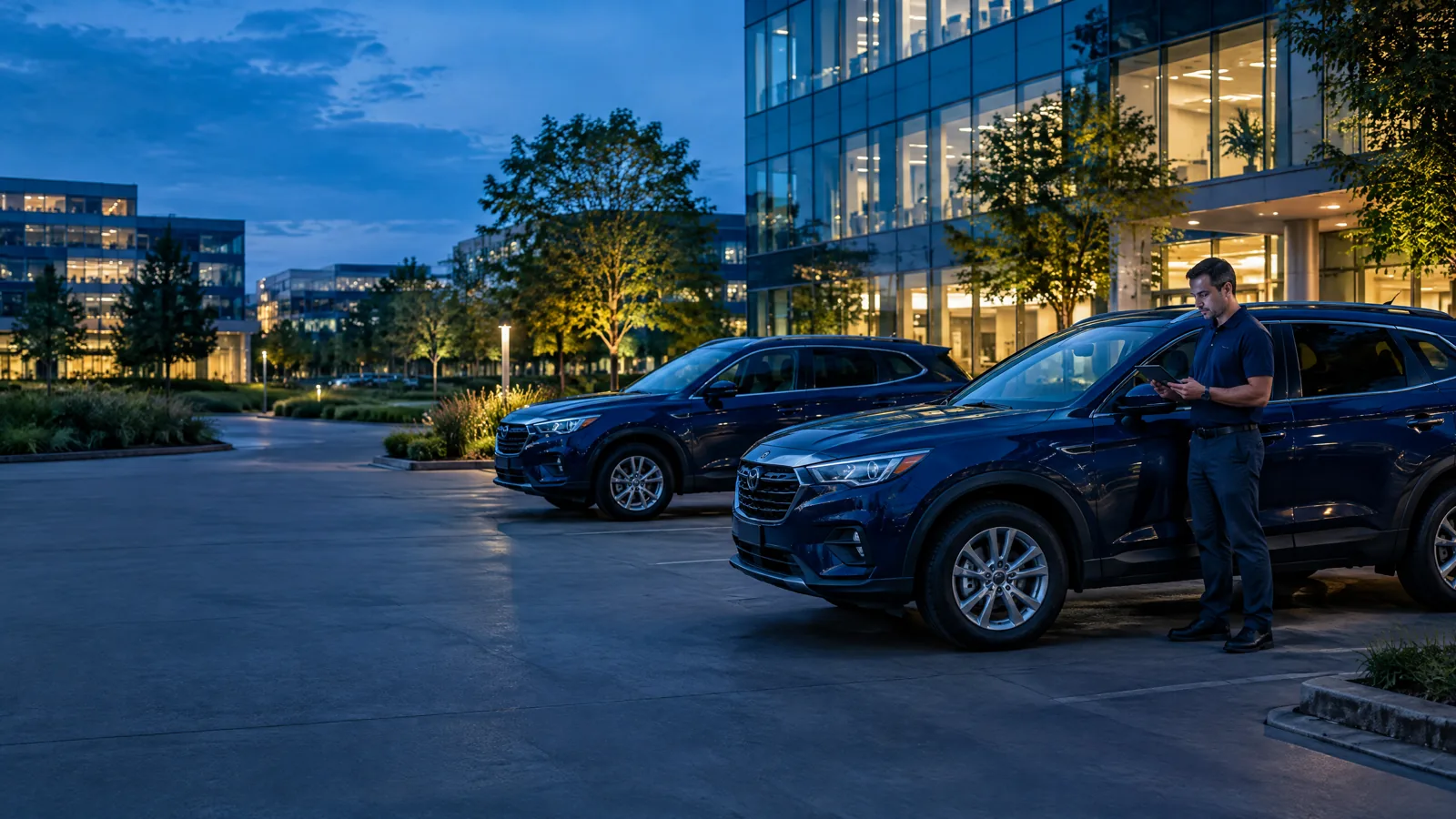
A patrol operation can combine company-titled SUVs, a leased unit, a rental, and a guard’s personal car on overnight callouts.
A patrol operation can combine company-titled SUVs, a leased unit, a rental, and a guard’s personal car on overnight callouts. Those are not interchangeable insurance exposures. Map title, driver, use, garaging, passengers, equipment, and the named insured before asking whether the company simply “has auto.” It is the practical way to test a patrol setup against the declarations, covered-auto symbols, HNOA, and physical-damage choices.
This is a focused companion to security patrol commercial auto insurance. It does not replace review of the policy forms or a client’s insurance exhibit.
Start with title, control, and the named insured
List every vehicle by VIN: the operating company’s titled SUVs, owner-titled cars, employee cars, and each rental or lease. Include its usual driver, overnight garaging, take-home permission, business mileage, passengers, and property carried. The titled owner should be correctly reflected as the principal/named insured. Business auto can be written for described autos or broader categories, and the proper setup depends in part on who holds title. [1]
A company-titled patrol SUV does not become an employee personal car because a supervisor takes it home. A long-term lease likewise needs its agreement, VIN, required insurance clause, and actual use reviewed. Whether it is treated as owned, hired, leased, or scheduled comes from the declarations and form—not the label used in the fleet spreadsheet.
Covered-auto symbols set the scope
Business Auto Coverage Form declarations use numeric covered-auto symbols to identify the category attached to each coverage. The standard symbol system uses 1 through 9 and 19; scope can be broad or narrow, and liability and physical damage need not use the same symbol. [1]
Review whether replacement units must be scheduled, whether liability includes hired and non-owned autos, and whether each patrol unit has the intended physical-damage coverage and deductible. Also confirm that the named insured is the entity contracting for security services. A COI cannot answer those questions: it is a summary, not a document that creates coverage or changes the policy. [5]
Rentals, hires, and leased patrol units
Hired auto is commonly the issue when a firm rents, hires, leases, or sometimes borrows a vehicle for work. A replacement SUV, an equipment van, and a storm-deployment rental should be disclosed as business use. Commercial auto does not automatically extend to a vehicle the company does not own, even when it uses it for work. [2]
Hired-auto liability is not the same as damage to the hired vehicle. HNOA is generally a commercial auto liability discussion. Collision, comprehensive, specified-perils coverage, deductibles, rental agreement obligations, and loss-of-use charges require separate confirmation. Physical damage can be purchased for owned, leased, or hired autos, but only if the form, covered-auto status, and terms provide it. [1]
Employee cars: HNOA is not car-damage coverage
When a guard uses a personally titled sedan to move from one site to another, the company has a non-owned auto liability exposure. Non-owned/HNOA coverage may protect the business for an employee’s business driving and is commonly excess over the employee’s personal auto policy. [1]
It does not automatically repair the employee’s car, replace their collision/comprehensive coverage, or make every personal policy suitable for patrol use. A personal policy may provide some business-use protection, but restrictions vary by carrier; primarily business use is likely not covered. [1] [2] Use approved-driver, license, MVR-consent where permitted, personal-insurance, equipment, and passenger rules as controls—not as coverage promises. A recurring personal-car patrol assignment merits underwriting review, not a one-time HNOA checkbox.
Take-home units, overnight territory, and passengers
Take-home units change garaging, driver, personal-use, and overnight-loss information. With the vehicle scheduled and the appropriate symbols shown, business auto can be structured for company cars taken home by employees; the declarations and endorsements remain decisive. [1]
Describe the overnight territory plainly: sites, usual radius, hours, interstate travel, client-property parking, and alarm or callout response. Separately disclose whether the firm transports only guards between posts or also clients, residents, detainees, or the public. Passenger transport is a different service and should not be assumed to fit a patrol classification or contract.
Physical damage and equipment in the vehicle
Auto liability, if covered, addresses the business’s legal responsibility for third-party bodily injury or property damage from a covered auto. It does not repair the patrol unit. Collision, comprehensive, and specified-perils coverage are physical-damage choices with their own vehicle listings, deductibles, valuation, and exclusions. [1]
List radios, laptops, body and dash cameras, keys, uniforms, barriers, and other property carried in each unit. Do not presume auto physical damage covers every item in the car, or that general liability pays for damage to the company’s property. Security specialty program materials separately identify business auto, property, and inland-marine/mobile-property options. [6]
Related coverage
Explore Commercial Coverages
Compare commercial insurance lines and find the right protection for your operation.
Keep auto, GL, professional liability, and workers’ compensation separate
Commercial auto concerns vehicle liability and, if selected, vehicle damage. GL addresses other premises and operations liability within its terms. Professional liability/E&O addresses alleged service failures where offered; workers’ compensation concerns employee work injuries. A BOP does not provide vehicle coverage. 1 Contracts may require more than one policy and endorsements beyond any licensing minimum.
Florida is one local illustration, not a national rule: a Class B security agency applicant must file evidence of commercial general liability at the statute’s stated minimum. That does not establish commercial auto, HNOA, physical damage, or all client-required endorsements. 4 Verify current rules with the relevant agency and compare the policy to each contract before binding or mobilizing.
A current security-industry supplemental asks about armed staffing, gun-control programs, incident reporting, mobile equipment, client contracts, HNOA, and primary commercial auto. 3 Disclose patrol response or pursuit-related duties, firearms, use-of-force exposure, arrest/detention authority, and transport exactly as performed. Never assume a policy covers intentional acts or allegations involving firearms, pursuit, or use of force; the form, endorsements, exclusions, facts, law, and claim determination control.
A hypothetical ownership scenario
Hypothetical: Meridian Patrol LLC titles two SUVs, leases a third, rents a replacement after a collision, and allows a guard to use her own sedan on an overnight route. Its review should confirm that the LLC is correctly named; owned and leased units have the intended liability and physical-damage setup; the rental fits intended hired-auto liability and any desired damage protection; and non-owned liability is evaluated for the guard’s sedan. HNOA does not automatically make damage to her car a company-covered loss. If Meridian begins transporting residents, it should disclose the new service before assuming its patrol setup applies.
Ellie Insurance Group has access to security commercial-auto and general-liability markets for review. Eligibility, coverage, limits, terms, and premium are subject to underwriting. Start with the security commercial-auto quote form, call 813-582-5215, or email quote@ellieinsurancegroup.com.
FAQ
Does HNOA cover an employee’s personal car if it is damaged on patrol?
Usually not as a physical-damage benefit for that car. Review the employee’s personal policy, financing terms, and separately arranged physical-damage coverage. 1 2
Are take-home patrol units automatically covered?
No. They should be scheduled or otherwise within the applicable symbol, with the right driver, garaging, use, and endorsements disclosed. 1
What should a patrol company send for an auto review?
Send vehicle VINs, title or lease documents, drivers, garaging and take-home rules, territory, rentals, employee-car use, passenger duties, contracts, and equipment and firearms-related operations.
Related guides: Armed security general liability insurance · Armed security, assault, battery, and firearms · Security company contracts, COIs, and endorsements
Sources and scope
- Insurance Information Institute, Business Vehicle Insurance
- Travelers, Hired and Non-Owned Auto Coverages
- CRC Group and RLI, Security Guard and Detective/Private Investigators Supplemental Application
- Florida Legislature, F.S. 493.6110 Licensee’s insurance
- New York Department of Financial Services, Certificates of Insurance and Endorsements
- Brownyard Group, Security Professionals Insurance
Educational disclaimer: This guide is general educational information, not legal, licensing, tax, or insurance advice. Coverage is determined only by the issued policy, declarations, endorsements, exclusions, facts, and applicable law. Licensing, vehicle, contract, and insurance requirements vary and can change; verify them with the relevant licensing agency, motor vehicle authority, client, and qualified legal or insurance advisers.
Working with an independent agent
Coverage needs vary by operation, contract, and state. An Ellie Insurance Group agent can review your situation and shop 100++ carrier markets on your behalf — start an Instant Quote or call 813-582-5215.
Get a real quote
Want a quote for the coverage discussed here? Start with general liability, workers' compensation, or commercial auto — or browse all commercial coverages and industries we serve.
Ellie Insurance Group editorial · This guide draws on the primary sources linked below. Requirements and contract terms change; an agent should review your specific operation and current documents before you rely on this summary.
Independent Agency
100+ carrier markets
5.0★ Google Rating
Verified Google reviews
Trusted Choice 5.0
5-star independent agency
InsuredBetter 5.0
29 verified client reviews
Same-Day Certificates
For active clients during business hours
Instant Commercial Quotes
Most submissions, same business day
Keep reading
Related Articles
Compliance & renewals
Auto Repair Shop Insurance Checklist
An auto repair shop insurance checklist is vital for ensuring comprehensive protection against the unique risks faced by the automotive service industry. Key coverages include Garage Liability, Garagekeepers Liability,…

Trucking
Broker and Shipper Insurance Requests: A Motor Carrier's COI Checklist
A broker says, “Send your insurance certificate so we can add you.” The tempting response is to forward the last COI on your phone. That may not be enough—and asking an agent to type new protections onto the certificate…
State requirements
Florida Garage Liability Insurance for Used Car Dealers: 2026 Guide
To hold an Independent (used) motor vehicle dealer license in Florida, the FLHSMV requires garage liability insurance on the state's certificate (minimum $25,000 combined single limit for bodily injury and property…
Next step
Ready to shop commercial coverage?
Start an instant quote or speak with a commercial agent. We'll review available markets and the carrier's requirements before coverage can be bound.