Skip to main content
Monday–Friday · 9:00 AM – 5:00 PM ET·independent · Insuring businesses nationwide

State requirements
Real Estate Investor Insurance: DP-3, Vacant, Fix & Flip, and STR Programs
Comprehensive guide to real estate investor insurance, covering DP-3, vacant property, fix & flip, and short-term rental (STR) programs for Florida investors.

Licensed Business Insurance Agent
Last reviewed June 2026 8 min read
Key takeaway
Real estate investor insurance is a set of specialized property and liability policies built for income-producing and non-owner-occupied buildings.
Quick Answer: Real estate investor insurance is a set of specialized property and liability policies built for income-producing and non-owner-occupied buildings. The right program depends on how the property is used: a long-term rental usually fits a DP-3 dwelling policy, an empty building needs a vacant property policy, a renovation needs builders risk or a renovation/fix-and-flip program, and a short-term rental (STR) needs a policy that contemplates paying guests. A standard homeowner (HO-3) policy is built for an owner-occupant and is the wrong tool for most investment properties.
If you own rentals, flips, or short-term rentals, the most expensive mistake is assuming one policy fits every property. Ellie Insurance Group helps investors shop on your behalf for real estate investor insurance, comparing programs across 100+ carrier markets so the coverage actually matches how each property is used today — not how it was used when you bought it.
What Business Owners Need to Know
Real estate investors operate in a different risk landscape than owner-occupants, and insurance carriers price that difference carefully. A homeowner policy assumes the named insured lives in the home, maintains it daily, and carries personal liability for a family household. An investment property breaks all three of those assumptions: a tenant or guest occupies the space, maintenance is periodic, and the liability exposure is commercial in nature. When a claim is filed on the wrong policy form, the carrier can investigate occupancy and deny the loss. That is why matching the policy form to the property's actual use is the single most important decision an investor makes.
The second thing investors should understand is that "use" is fluid. A property can move through several insurance categories in a single year — purchased vacant, renovated, rented long-term, then later listed as a short-term rental. Each of those phases has a different correct policy. Carriers care about occupancy status, renovation activity, whether the building is furnished, and how often strangers enter the property. Telling your agent when the use changes is not a formality; it is what keeps coverage in force.
Third, investors should separate the building, the contents, the loss of income, and the liability into distinct buckets. The building (dwelling) coverage rebuilds the structure. Contents or "landlord personal property" covers items you own inside, such as appliances or furnishings in a furnished rental. Loss of rents (fair rental value) replaces income while a covered loss makes the unit unrentable. Liability responds when a tenant, guest, or visitor is injured and holds you responsible. A complete investor program addresses all four, and an umbrella policy can sit on top to raise liability limits across multiple properties.
Ellie Insurance Group is an independent agency, independent and insuring investors nationwide, serving clients from Tampa and Brooksville. Because the agency is independent, it shops 100+ carrier markets rather than representing a single company's appetite — which matters for investment property, where one carrier may decline a vacant flip while another writes it comfortably.
Coverage Details and Common Mistakes
The table below maps the most common investor scenarios to the policy that typically fits and the mistake that most often causes a denied claim.
| Property use | Policy that usually fits | Common mistake |
|---|---|---|
| Long-term rental (6+ months) | DP-3 dwelling / landlord policy with fair rental value | Leaving an HO-3 in place after the owner moves out |
| Vacant or between tenants 30–60+ days | Vacant property policy or vacancy endorsement | Assuming a standard policy covers an empty building |
| Renovation / fix & flip | Builders risk or renovation/fix-and-flip program | Buying a landlord policy that excludes ongoing construction |
| Short-term / vacation rental (STR) | STR-specific policy or commercial program | Using a personal HO-3 or DP-3 that excludes paying guests |
| Multiple properties | Portfolio/schedule + umbrella for liability | Carrying low liability limits on high-value holdings |
A DP-3 (dwelling fire, special form) is widely considered the standard for long-term rentals because it is an open-perils form on the building and includes fair rental value, so income continues if a covered loss makes the unit uninhabitable. The frequent error is leaving a homeowner policy in place after converting a former residence into a rental; if a claim occurs, the carrier may discover the owner no longer lives there and dispute coverage.
Vacant property is its own category. Most standard property policies restrict or exclude coverage once a building has been vacant beyond a set period (often around 30 to 60 days), because empty buildings face elevated risk from vandalism, water damage that goes unnoticed, and theft of fixtures. Investors who buy distressed property and let it sit, or who have long turnover gaps, should arrange a vacant policy or vacancy endorsement rather than assume the existing policy still responds.
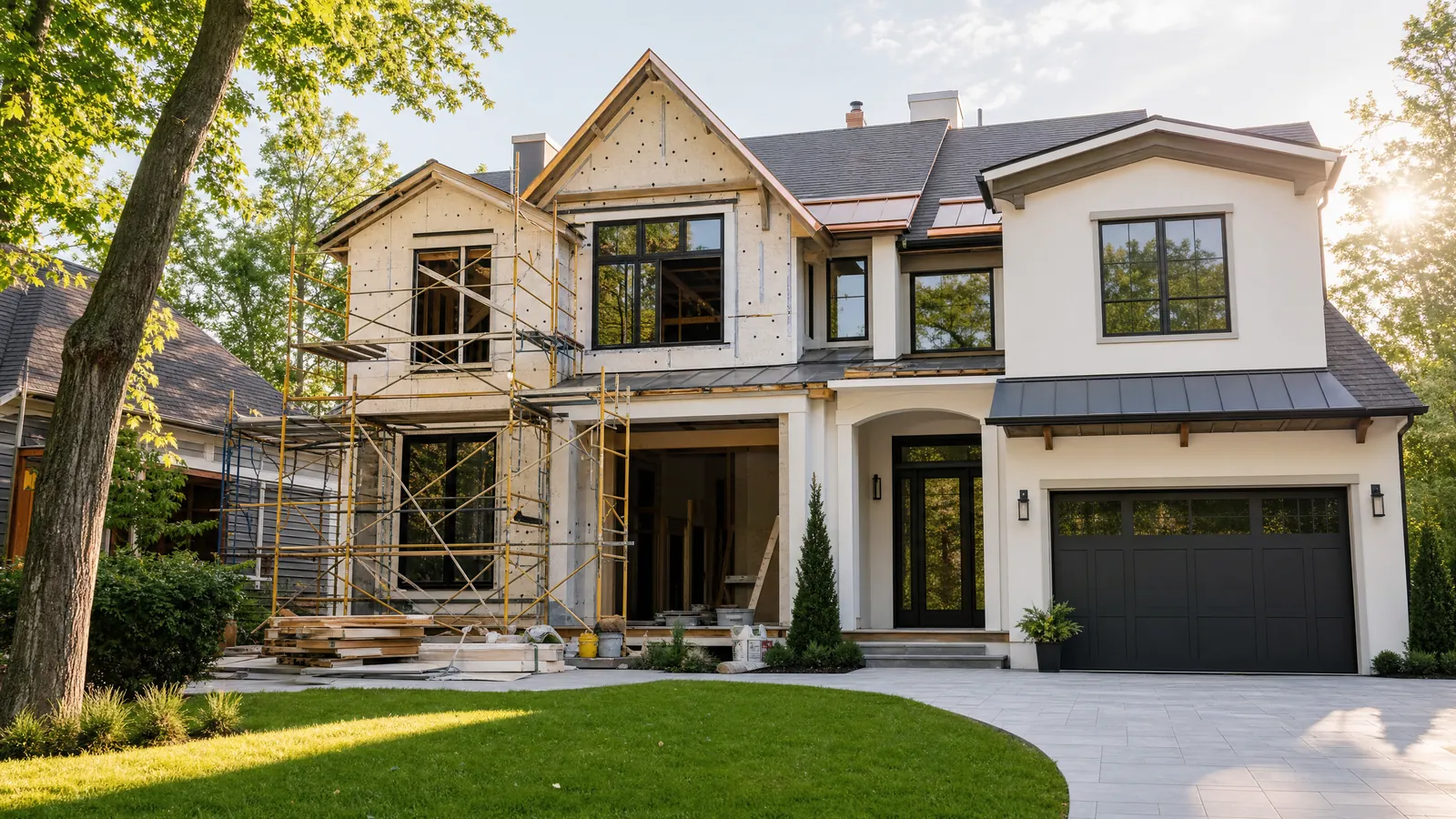
Fix and flip projects need coverage that contemplates active construction. A landlord policy generally is not designed for a building being structurally renovated, and may exclude the work itself. Builders risk or a dedicated renovation/fix-and-flip program is built for materials, the structure under renovation, and the gap before the property is sold or rented. The mistake here is insuring a flip as if it were a finished rental.
Short-term rentals are where personal policies most often fail. An HO-3 or even a DP-3 may exclude or limit losses tied to "business use" or paying guests. A property listed on a nightly-rental platform is a commercial activity, and it should be insured with a policy that explicitly anticipates transient guests, higher liability frequency, and furnished contents. Relying on a platform's host protection alone is risky; those programs are typically limited and are not a substitute for your own policy.
For any of these, Ellie Insurance Group can review the property's current use, occupancy, renovation status, and rental model and shop on your behalf through real estate investor insurance, comparing 100+ carrier markets for the right form at a competitive rate.
How This Applies to Florida Investors
Florida adds a property-catastrophe layer that investors elsewhere may not face. Wind and named-storm exposure means many Florida property policies carry a separate hurricane or windstorm deductible — often expressed as a percentage of the building's insured value rather than a flat dollar amount — which can substantially change out-of-pocket cost after a storm. Investors should know their wind deductible before hurricane season, not after a claim. Flood is a separate consideration entirely: standard property policies exclude flood, so investors in flood-prone areas typically need a separate flood policy to protect the building.
Florida's hard property market also affects availability. Some national carriers limit coastal or older-roof properties, while surplus-lines and regional carriers may still write them. This is precisely where an independent agency's access to many markets helps, because a single-carrier agent can only offer that one company's answer. For furnished short-term rentals in tourist markets like the Gulf Coast and Central Florida, expect carriers to ask detailed questions about occupancy frequency, cleaning turnover, and whether the property is professionally managed.

When to Review Your Policy
Review coverage every time a property changes use — purchased, renovated, rented, vacated, or relisted as a short-term rental — because the correct policy form changes with it. Do not wait for renewal to report that a long-term rental is now a nightly STR, or that a tenant moved out and the unit will sit empty during a remodel. A coverage gap created by a use change is one of the most common reasons investor claims are denied.
You should also review whenever your portfolio grows or your equity increases. More doors means more liability exposure, and rising property values mean rebuild costs (and therefore the right insured value) climb too. An umbrella policy is worth revisiting as you add properties, since it can raise liability limits across the whole schedule cost-effectively. Finally, review after any roof replacement, major system upgrade, or security improvement — these can improve both insurability and pricing.
Related Commercial Insurance Pages
| Page | Why it may matter for investors |
|---|---|
| Commercial Property Insurance | Core building, contents, and loss-of-income protection for larger holdings. |
| General Liability Insurance | Responds to third-party injury and property damage claims at your properties. |
| Builders Risk Insurance | Built for property under renovation or construction, including flips. |
| Umbrella Liability Insurance | Raises liability limits across multiple properties affordably. |
| Real Estate Investor Insurance | Program overview tailored to rentals, flips, vacant property, and STRs. |
FAQs
Can I insure a rental property on a homeowner policy?
Generally no. A homeowner (HO-3) policy assumes the owner lives in the home. Once it is rented to others, a DP-3 dwelling/landlord policy is usually the correct form, and keeping an HO-3 in place can lead to a denied claim if the carrier discovers the property is non-owner-occupied.
What is a DP-3 policy?
A DP-3 is a dwelling fire policy, special form, commonly used for long-term rentals. It typically provides open-perils coverage on the building and includes fair rental value, so rental income can continue if a covered loss makes the unit unrentable.
Do I need special insurance for a short-term rental?
Usually yes. Many personal policies exclude or limit losses tied to paying guests. A short-term rental should be insured with a policy that explicitly anticipates transient guests, furnished contents, and the higher liability frequency that comes with nightly turnover. Platform host protection alone is generally not enough.
How is a vacant property insured?
Through a vacant property policy or a vacancy endorsement. Standard property policies often restrict coverage once a building has been vacant beyond roughly 30 to 60 days, because empty buildings face higher risk of vandalism, theft, and unnoticed water damage.
Does my Florida policy cover hurricane and flood?
Wind/hurricane is typically covered under the property policy but often with a separate percentage-based hurricane deductible. Flood is excluded from standard property policies and requires a separate flood policy. Confirm both before hurricane season.
Should I carry an umbrella across my properties?
Many investors do. An umbrella raises liability limits above your underlying property and liability policies and can cover multiple properties on one schedule, which is an efficient way to protect growing equity.
Instant Quote
Your insurance should match how each property is used right now — rented, vacant, under renovation, or hosting guests. Ellie Insurance Group can review your portfolio and shop on your behalf across 100+ carrier markets. Start with real estate investor insurance and choose Instant Quote.
Sources
This guide is general information and is not legal, licensing, tax, or insurance advice. Statutes, thresholds, and licensing rules change; always confirm current requirements with the relevant agency and verify coverage details against the actual policy and a licensed agent.
Working with an independent agent
Coverage needs vary by operation, contract, and state. An Ellie Insurance Group agent can review your situation and shop 100++ carrier markets on your behalf — start an Instant Quote or call 813-582-5215.
Get a real quote
Want a quote for the coverage discussed here? Start with general liability, workers' compensation, or commercial auto — or browse all commercial coverages and industries we serve.
Written & reviewed by
Licensed Business Insurance Agent · Ellie Insurance Group
Licensed business insurance agent at Ellie Insurance Group · Access to 100+ carrier markets.
More about KevinIndependent Agency
100+ carrier markets
5.0★ Google Rating
Verified Google reviews
Trusted Choice 5.0
5-star independent agency
InsuredBetter 5.0
29 verified client reviews
Same-Day Certificates
For active clients during business hours
Instant Commercial Quotes
Most submissions, same business day
Keep reading
Related Articles

State requirements
Commercial Auto Insurance Florida: What Businesses Need to Know
Commercial auto insurance in Florida is essential for businesses that use vehicles for work, whether it's a single car for client visits or a fleet of delivery trucks. It covers liability for accidents, medical…
State requirements
Commercial Flood Insurance in Florida: What Business Owners Need to Know
Commercial flood insurance in Florida is a critical necessity for businesses, as standard commercial property policies almost universally exclude flood damage. Whether through the National Flood Insurance Program (NFIP)…

State requirements
Florida Commercial Insurance Requirements by Business Type (2026)
Florida's only broad statutory insurance mandates are workers' compensation and commercial auto liability — almost everything else is required by contract, lease, or licensing board rather than general statute. In…
Next step
Ready to shop commercial coverage?
Start an instant quote or speak with a commercial agent. We'll review available markets and the carrier's requirements before coverage can be bound.