Skip to main content
Monday–Friday · 9:00 AM – 5:00 PM ET·independent · Insuring businesses nationwide

Licensed Business Insurance Agent
10 min read
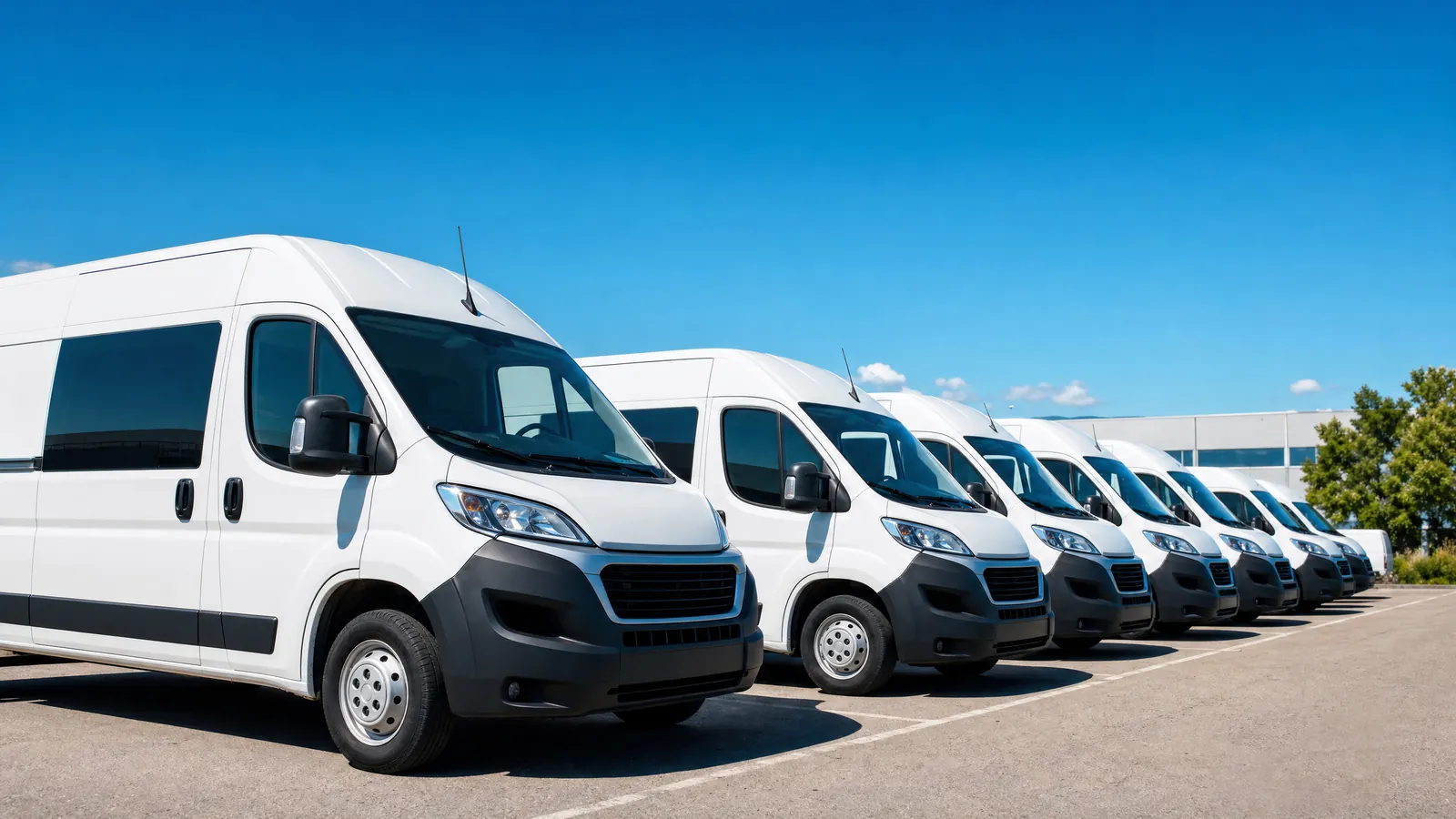
When a work vehicle is in a crash, the expense can reach beyond the repair bill: a driver may be unable to make calls, a crew may miss jobs, and a customer contract may require limits the business did not buy. The practical starting point is to match insurance to how every vehicle is used—business-owned vehicles, employees' personal vehicles, rentals, trailers, and the tools or cargo being carried. Florida's registration minimum is only a legal floor, not a coverage plan for the income your vehicles support.
Ellie Insurance Group helps Florida businesses compare commercial-auto options around the way they actually operate, including liability limits, physical-damage deductibles, hired and non-owned auto exposure, and contract requirements. That means comparing the protection as well as the price. Ellie offers extremely competitive pricing and access to unique industry-focused insurance programs, so a contractor, delivery business, real-estate team, or fleet owner can pursue coverage that fits the work rather than merely checking a minimum-requirement box.
Start with how your business uses vehicles
Commercial auto is commonly appropriate when the business owns, registers, or regularly uses a vehicle, or when employees drive for the business. A personal policy may allow some business use and exclude other use; do not assume that a vehicle used for appointments, deliveries, tools, passengers, or paid transportation is protected without checking the actual policy and insurer.
Use this decision guide before comparing policies:
| Your situation | Coverage question to answer | Why it matters to the business |
|---|---|---|
| The business owns, leases long-term, or registers a car, van, pickup, truck, or specialized vehicle | Is each vehicle specifically listed and covered for its real use? | A scheduled auto is a vehicle listed on the policy. Listing the right vehicle and use helps avoid discovering a gap after a crash interrupts operations. |
| An employee or owner uses a personal vehicle for errands, sales calls, deliveries, or a jobsite visit | Does the personal policy permit that use, and does the business need hired and non-owned auto liability? | The business may face a liability claim even though it does not own the vehicle. |
| The business rents, borrows, or leases a vehicle short-term | What liability protection applies, and who is responsible for damage to the rented or borrowed vehicle? | A rental agreement can shift repair costs or impose insurance requirements that are different from liability coverage. |
| A truck pulls a trailer or carries tools, equipment, or customers' goods | Is the trailer covered, and are loose tools, equipment, and cargo insured separately? | An auto policy can protect the vehicle while the equipment that earns revenue or the customer's property remains uninsured. |
The vehicle list is not the only decision. Tell the insurer whether drivers cross state lines, how far they normally travel, what they haul, where vehicles are garaged, and whether a customer contract requires a certificate, higher limit, or endorsement. Those details affect both price and whether the policy is built for the work.
Florida rules: a starting point, not a business limit
For a Florida-registered vehicle with four or more wheels, the usual registration baseline is $10,000 of personal injury protection (PIP) and $10,000 of property-damage liability (PDL). That is a legal floor. It does not mean $10,000 is enough to pay for a multi-vehicle collision, an injured third party's claim, or the limits required by a customer or lender. [1]
PIP can pay certain covered injury expenses without regard to fault, but it is limited. Florida law generally provides 80% of reasonable and necessary medical expenses and 60% of lost gross income, subject to the policy limit. Initial services and care generally must be received within 14 days; medical benefits can be limited to $2,500 unless a qualifying provider determines an emergency medical condition. [2] The no-fault law also limits recovery for pain and suffering unless the injury meets a statutory threshold, such as significant permanent loss of an important bodily function, permanent injury, significant permanent scarring or disfigurement, or death. [3]
Some operations have separate rules. Florida commercial motor vehicles have financial-responsibility requirements based on the vehicle's weight, and interstate for-hire carriers with Federal Motor Carrier Safety Administration (FMCSA) operating authority must maintain the required financial-responsibility filing. Federal limits can depend on the vehicle, cargo, and passenger operation. [4] [5] Confirm the current rule for the vehicle, its weight, use, and operating territory rather than relying on a general Florida minimum.
Choose protection for the loss that could stop work
A commercial-auto policy can include several coverages. What is actually insured depends on the declarations, covered-auto designations, limits, deductibles, exclusions, and endorsements—not this list alone.
| Coverage | What it is designed to do | Buyer question that prevents surprises |
|---|---|---|
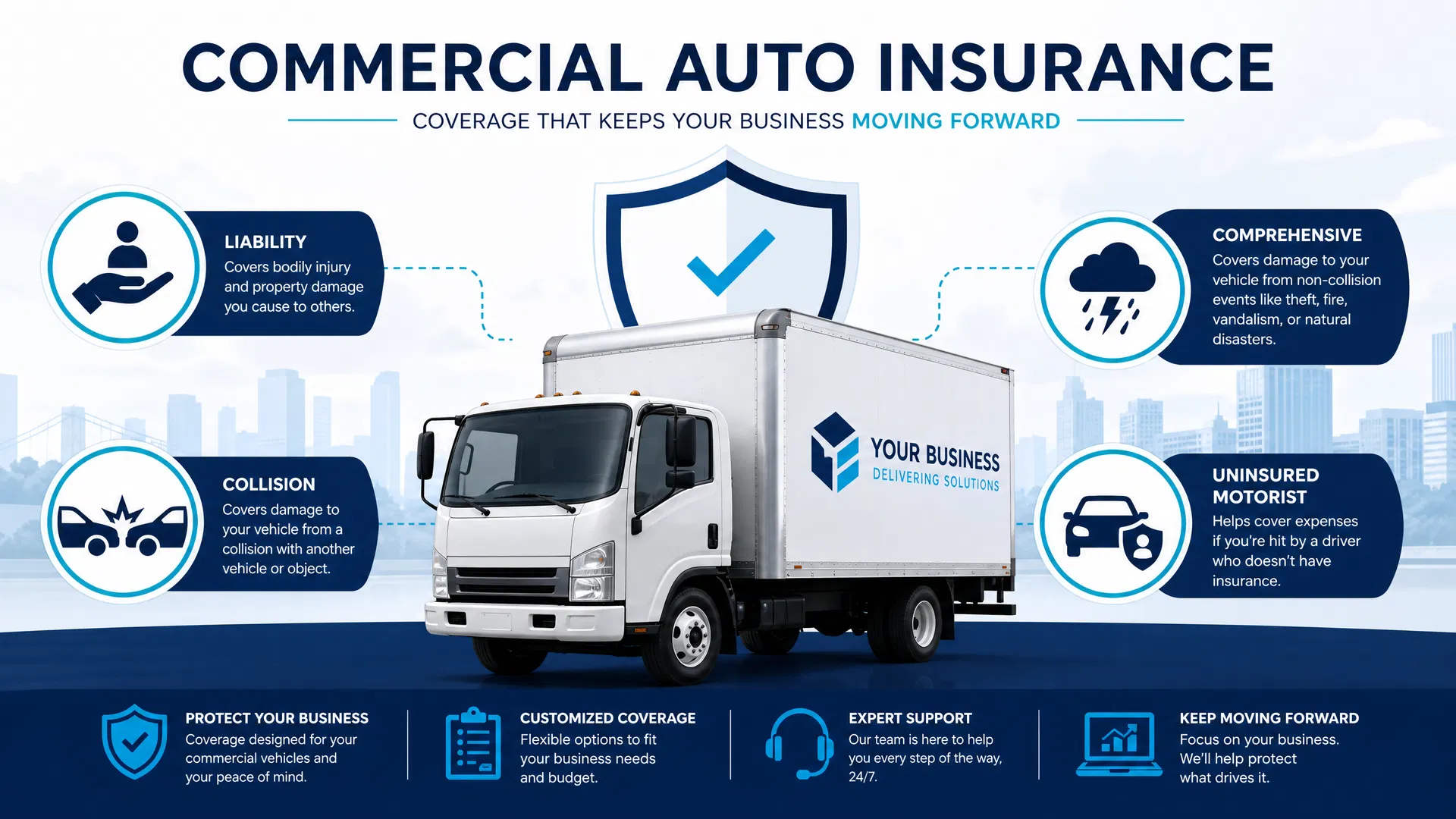
| Bodily injury and property-damage liability | Pays third parties when an insured driver is legally liable for injury or damage to their vehicle, building, fence, or other property. | Could one serious injury or a contract-required limit exceed the policy limit? |
| Collision and comprehensive | Collision coverage pays for damage to a covered business vehicle if it collides with another vehicle or object, regardless of fault. Comprehensive coverage covers damage to a covered business vehicle from non-collision events, such as theft, vandalism, fire, falling objects, or natural disasters. | Is the vehicle worth repairing or replacing after the deductible, and what valuation applies—actual cash value, agreed value, or another method? |
| Uninsured/underinsured motorist (UM/UIM) | Primarily bodily-injury protection for insured people when an at-fault driver has no insurance or not enough liability insurance. In Florida, when bodily-injury liability is provided, UM may be rejected or selected at lower limits in writing. [6] | Would the business and its people have enough protection if the at-fault driver has little or no insurance? |
| Medical payments (MedPay) | Covers medical expenses for you and your passengers, regardless of fault, often in addition to PIP. | How does it coordinate with PIP and health coverage for the people who ride in the vehicle? |
| Hired and non-owned auto liability | Can protect the business when it is legally liable for an accident involving a rented, leased, borrowed, or employee-owned vehicle used for work. | Is it needed for the actual work trips employees and owners make? It is liability coverage, not a substitute for scheduling owned vehicles or for physical-damage coverage on an employee's or rental vehicle. [7] |
| Towing and labor | Covers the cost of towing and roadside assistance if a business vehicle breaks down. | Would downtime and a disabled work vehicle create a larger cost than the service itself? |
Ask specifically about trailers, permanently attached equipment, loose tools, and cargo. Coverage for these items can be different from coverage for the truck. Inland marine coverage may fit mobile tools and equipment; motor truck cargo coverage may be needed for property hauled for others. An umbrella or excess policy can add liability limits above the commercial-auto policy, but it does not replace the need for the correct underlying auto coverage, vehicles, and endorsements.
Protection beyond the legal minimum is a buying objective, not a promise that every loss will be insured. Review the policy terms before a loss, especially exclusions, deductibles, covered vehicles, and any customer contract requirements. [8]
Compare price without trading away the protection you need
The main cost drivers are the drivers' records and loss history, number of drivers, vehicle type, weight and value, garaging location, operating radius, commodities carried, liability limits, and physical-damage deductible. A higher deductible can lower premium, but it is the amount the business must be prepared to absorb on a covered physical-damage claim. A lower premium can also reflect less protection, a narrower group of covered autos, or a limit that will not satisfy a contract.
Compare quotes on the same assumptions. Check that each proposal uses the same vehicles and drivers, intended use, territory, liability limits, physical-damage valuation and deductible, UM/UIM choice, hired and non-owned auto exposure, and any trailer, cargo, or contract requirement. This makes a price comparison meaningful and shows which option best protects the revenue-producing vehicles in your business.
Review coverage when the business changes
Regularly reviewing your commercial auto insurance policy is vital to ensure it keeps pace with your business's evolution and changing risks. Consider a review:
- Annually at renewal: Assess whether the current coverage still aligns with operations, vehicle usage, and budget. It is also a chance to compare competitive pricing on the same protection.
- When you acquire new vehicles: Any time you purchase, lease, or add a vehicle to the business fleet, update the policy promptly.
- When you hire new drivers: Driver experience and driving records can affect both premium and coverage needs. Ensure regular business drivers are accounted for.
- When operations change: If you transport different goods, expand the service area, or change how vehicles are used, the coverage needs may change too.
- After an accident or claim: An incident can show where a higher limit, different deductible, or vehicle change might be worth considering.
- Before a major contract: Check that the policy meets any specific insurance limits or endorsement requirements before you bid or begin the work.
If you are an existing Ellie customer and need help with an active policy or after an accident, call 813-582-5215 or email quote@ellieinsurancegroup.com. Contact the applicable insurer promptly and follow the reporting instructions in your policy; asking for help does not require a quote request.
Florida and multistate operations
Florida traffic and severe weather make it important to weigh the cost of downtime and vehicle repair alongside third-party liability. Comprehensive coverage may address certain covered weather losses, but deductibles, valuation, exclusions, and policy terms still control. Businesses that travel beyond Florida should confirm policy territory, vehicle garaging, regular operating radius, drivers, commodities, and any contract or authority requirement. Do not assume a Florida policy automatically satisfies another state's or a federal requirement. 4 5
How Ellie helps Florida businesses compare commercial auto
Ellie can help turn the vehicle-use checklist into a clear comparison: which autos should be scheduled, whether employee and rental exposure calls for hired and non-owned liability, how a deductible affects cash flow after a loss, and whether a contract needs a higher liability limit or an endorsement. The agency compares actual protection and price across markets, brings access to its industry-focused programs, and remains available as vehicles, drivers, and contracts change.
To compare coverage for your Florida operation, start an Instant Quote. Include the vehicle types, how they are used, who drives them, and any contract requirement so the comparison reflects your business.
Related commercial insurance pages
| Page | Why it may matter for Florida businesses |
|---|---|
| General Liability Insurance | Protects against non-auto-related third-party injury and property-damage claims. |
| Workers' Compensation Insurance | Essential for businesses with employees to cover work-related injuries. |
| Commercial Property Insurance | Protects a business's physical assets, including buildings and contents. |
| Trucking Insurance | Offers specialized considerations for heavy trucks and motor-carrier operations. |
| Business Owners Policy (BOP) | Combines general liability and property insurance for small to medium-sized businesses. |
FAQs
What is the difference between personal and commercial auto insurance?
Personal auto insurance is written for personal use. Commercial auto is designed for business-owned vehicles and business vehicle exposure, such as deliveries, transporting tools, client visits, or employees driving for work. The exact personal-policy allowance for business use varies, so confirm the actual use with that insurer before relying on it.
Is commercial auto insurance required in Florida?
Florida registration generally requires PIP and property-damage liability. A commercial-auto policy is usually appropriate when the business owns, registers, or regularly uses the vehicle, or when employees drive it for the business. If an owner or employee uses a personal vehicle for work, ask that insurer about the exact use and consider hired and non-owned auto liability for the business. Heavier, interstate, passenger, and other regulated operations can have separate requirements. 1 4 5
What is hired and non-owned auto liability?
It can protect the business's liability exposure when someone rents, borrows, leases, or uses an employee-owned vehicle for work. It generally does not pay for damage to the employee's car or rented vehicle, business property inside it, or a driver's injuries, and it is not a replacement for commercial coverage on vehicles the business owns or regularly uses. 7
How can I manage the cost of commercial auto insurance in Florida?
Keep driver and vehicle information current, address loss trends and driver safety, choose a deductible the business can afford after a loss, and compare like-for-like coverage. Focus on the differences in limits, covered autos, deductibles, and exclusions—not price alone.
Does commercial auto insurance cover equipment in my truck?
It may cover the vehicle and certain permanently attached equipment, subject to the policy. Loose tools, mobile equipment, and goods being transported can need separate inland marine or cargo coverage. Ask for those items to be reviewed instead of assuming they are part of the truck's physical-damage coverage.
Sources
Put Ellie on your side
Ellie gives your business access to industry-focused programs and highly competitive pricing. We help you compare what you pay with the protection you are buying, and stay in your corner after you buy. Explore the related coverage options or let us help with your business.
About the author
Licensed Business Insurance Agent · Ellie Insurance Group
Licensed business insurance agent at Ellie Insurance Group · Access to 100+ carrier markets.
More about KevinKeep reading
Related Articles
State requirements
Florida Garage Liability Insurance for Used Car Dealers: 2026 Guide
Florida used-car dealers need protection that does more than satisfy a license filing. A serious test-drive injury, damage to a customer's vehicle, or a loss across the inventory can create an expense that the filing…
Compliance & renewals
Auto Repair Shop Insurance Checklist
If customer cars are in your bays, a basic liability policy alone may leave important gaps. This auto repair shop insurance checklist helps you separate protection for injuries and third-party damage from protection for…

Trucking
Broker and Shipper COI Requests: What Motor Carriers Must Check Before Dispatch
A broker or shipper needs your certificate of insurance (COI). Learn what it can show, what it cannot change, and how to compare the request with your cargo and auto coverage before dispatch.
Next step
Competitive pricing. An insurance team in your corner.
Take advantage of Ellie's industry-focused programs and competitive market access. Let us help you find coverage for the way you work, compare the real protection behind the price, and support your business after you buy.