Skip to main content
Monday–Friday · 9:00 AM – 5:00 PM ET·independent · Insuring businesses nationwide

Licensed Business Insurance Agent
8 min read
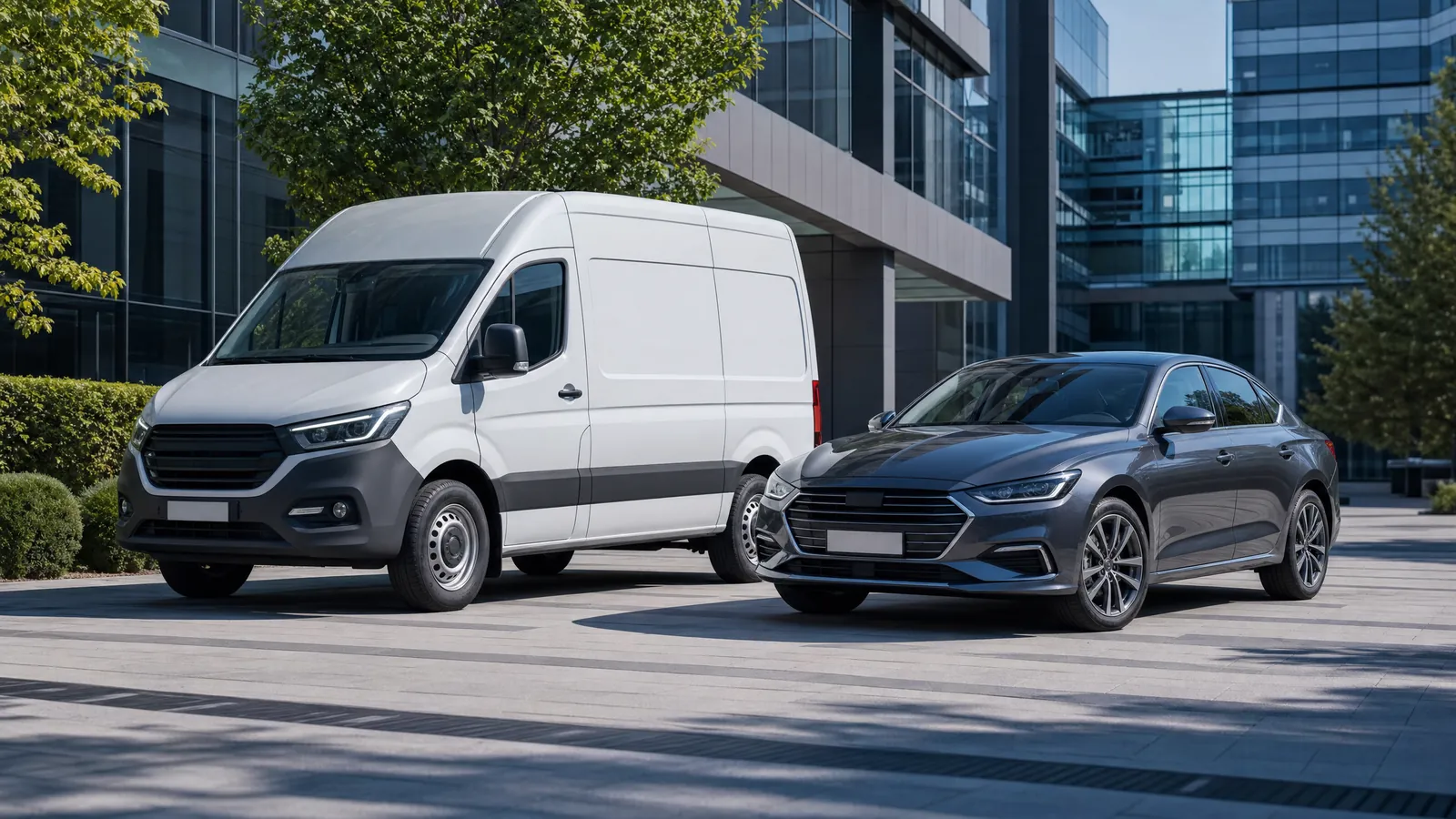
A vehicle can be essential to earning revenue without automatically fitting one insurance policy or the other. The practical starting point is who owns or leases the vehicle, who drives it, and what work it does. A business-owned or long-term leased vehicle, or one used regularly in operations or to carry people or goods for a fee, will often need to be listed on a commercial auto policy. An owner’s or employee’s personal car used occasionally for work may be handled differently, so check that personal policy’s business-use terms before relying on it.[2]
This distinction matters after an accident. The business may face a claim for injury or damage caused while someone was working, while the vehicle itself, its tools or cargo, and an injured employee can involve different insurance questions. The goal is not simply to meet a minimum requirement; it is to understand the protection your business needs to keep serving customers after a loss.
Start With the Vehicle and the Work It Does
Use these common situations as a decision framework rather than a blanket rule:
- Business-owned or long-term leased vehicle: Ask to have the vehicle scheduled on the appropriate commercial auto policy. Review the drivers, operating territory, vehicle type and liability limit. Lender or lease terms may also require physical-damage coverage.
- Owner’s or employee’s personal car used for occasional work: Read the personal policy’s business-use terms and ask the insurer how the planned use is handled. A client visit or errand is different from regular delivery, passenger transport or a vehicle that is effectively part of daily operations.
- Rental or borrowed vehicle used for work: Ask whether hired-auto liability is appropriate and how damage to the rented or borrowed vehicle is addressed. The rental agreement and any card benefits can matter separately.
- Delivery, passenger, for-hire or regulated trucking work: These uses can require commercial auto and may bring separate policy, contract or regulatory requirements. Confirm the rules that apply before starting the work or signing a contract.
A business may be responsible for an employee’s driving during work even when the employee owns the car. Non-owned auto liability is designed to help with the business’s third-party liability exposure when employees use personal vehicles for business. It is not a substitute for scheduling vehicles the business owns, leases or regularly uses.[3] [4]
What Commercial Auto Does—and Does Not—Cover
Commercial auto is assembled from selected coverages, covered autos, limits and endorsements. It is not a single promise that every business vehicle, person or item is covered.
- Auto liability addresses bodily injury or property damage to others when the insured is legally responsible, subject to the policy’s limit and exclusions. Higher limits can matter when a crash could put contracts, assets or future income at risk.
- Collision and comprehensive help pay for physical damage to a scheduled vehicle only when purchased. Collision applies to a crash with another vehicle or object. Comprehensive, sometimes called other-than-collision coverage, addresses certain non-crash losses such as theft, fire or vandalism. Deductibles apply.
- Uninsured/underinsured motorist coverage, medical payments and personal injury protection (PIP) vary by state and policy. Ask which options apply where your vehicles are registered and operated.[1] [2]
Hired and non-owned auto (HNOA) is especially easy to misunderstand. Hired auto generally concerns liability from vehicles your business rents, leases or borrows for work. Non-owned auto generally concerns business liability when employees use their own vehicles for work. These coverages are typically liability-focused. They generally do not pay to repair an employee’s vehicle or replace an employee’s personal auto coverage, and they do not replace workers’ compensation for an employee’s work injury.[3] [4] [5]
Tools, cargo and employee injuries deserve their own question. Damage to a covered auto is not automatically coverage for tools left inside it or goods being transported, and auto liability is not workers’ compensation. A contractor carrying expensive equipment, a business moving customers’ goods, or an employer with drivers should ask whether separate property, cargo or workers’ compensation coverage is needed.
Compare the Right Protection, Not Just the Policy Label
Personal and commercial auto policies can both include liability and physical-damage options, but they are built for different ownership, driver and use patterns. Compare the actual proposal against the way your business earns income:
| Question | Why it matters |
|---|---|
| Is the vehicle titled to the business or under a long-term business lease? | It may need to be scheduled as a commercial auto rather than treated like a personal car. |
| Do employees drive their own cars for errands, sales calls or service visits? | The business may need to evaluate non-owned auto liability, while employees still need suitable personal auto coverage. |
| Do you rent, borrow or lease vehicles for jobs? | Hired-auto liability and the agreement’s damage obligations are separate items to review. |
| Does the vehicle carry tools, cargo, passengers or people for a fee? | Those activities can create separate property, contract or regulatory needs. |
| What limits and deductibles can the business absorb? | They affect both the price and the out-of-pocket cost or liability exposure after a loss. |
There is no reliable rule that commercial auto is always more expensive than personal auto. Price depends on the vehicle and its use, drivers and loss history, where it is garaged and driven, selected limits, deductibles, and whether physical-damage coverage is included. Compare like for like: a lower price is not a useful result if it omits a vehicle, driver, endorsement or limit the business needs.[2]
Florida Requirements and Contract Requests
In Florida, a currently registered vehicle with four or more wheels generally must carry at least $10,000 in PIP and $10,000 in property damage liability (PDL) continuously. Those are registration minimums, not a recommendation for an adequate business liability limit.[1]
Other states have different rules, and requirements can change. Check the current requirements with the state insurance or motor-vehicle agency, and also review lender, lease and customer-contract requirements.
A customer or landlord may ask for a certificate of insurance (COI). A COI is evidence and a summary of an existing policy’s dates, limits and listed coverages; it does not amend the policy. If a contract requires an additional insured, confirm that the required endorsement has been issued and review who it covers, which operations it applies to, and any limits or exclusions. Receiving a certificate alone does not create additional-insured rights.[6] [7]
Related coverage
Commercial Auto Insurance
Compare highly competitive pricing for business-vehicle coverage that fits the way your team drives.
Review Coverage When the Business Changes
Review the policy before renewal and whenever you add or sell vehicles, hire drivers, expand your service area, begin delivery or passenger work, change how vehicles are titled or leased, or sign a contract with insurance requirements. The review is an opportunity to identify changes for the insurer or agent to address; it does not by itself guarantee a price, eligibility, compliance or payment of a future claim.
How Ellie Helps With This Decision
Ellie Insurance Group helps you turn the ownership-and-use questions above into a useful commercial auto comparison. We look at the vehicles, drivers, regular work use, required limits, deductibles and contract needs so you can compare actual protection—not just a premium. Ellie offers extremely competitive pricing and access to industry-focused insurance programs, with ongoing support as your fleet, staff or operations change.
If you are already an Ellie customer and a vehicle, driver, use or contract has changed, call 813-582-5215 or email quote@ellieinsurancegroup.com for help reviewing the change. If you are shopping for coverage, start an Instant Quote.
Related Commercial Insurance Pages
- Commercial Auto Insurance
- Commercial General Liability Insurance
- Commercial Property Insurance
- Workers' Compensation Insurance
- Business Owner's Policy (BOP)
- Professional Liability Insurance
- Cyber Liability Insurance
FAQs
Q: What is the main difference between personal and commercial auto insurance?
A: The key difference is not a policy label alone. It is whether the policy’s covered vehicles, drivers and permitted use match the way the vehicle supports the business. Commercial auto is commonly used for business-owned or regularly operated vehicles and can be tailored with business liability limits and selected coverages. A personal car used for limited work may have different rules, so check its policy rather than assuming.
Q: Do I need commercial auto insurance if I use my personal car for work?
A: Not necessarily, but do not assume personal coverage applies. Confirm the personal policy’s business-use terms, how often the car is used, what it carries and whether it transports people or goods for a fee. The business should also consider its third-party liability exposure when employees drive personal cars for work.3 4
Q: What is Hired and Non-Owned Auto coverage?
A: Hired auto generally addresses liability from rented, leased or borrowed vehicles used for work. Non-owned auto generally addresses the business’s liability when employees use personal vehicles for work. HNOA is usually liability protection, not coverage for damage to an employee’s car, tools or cargo, or an employee work injury.3 4 5
Q: Does a certificate of insurance satisfy an additional-insured requirement?
A: Not by itself. The certificate summarizes existing coverage and does not change the policy. If the contract requires additional-insured status, obtain and review the applicable policy endorsement.6 7
Q: What are Florida’s minimum auto insurance requirements?
A: For a currently registered vehicle with four or more wheels, Florida generally requires $10,000 PIP and $10,000 PDL continuously. Business owners should treat that as a registration baseline and decide their liability limit based on their operations, assets and contracts.1
Q: How does Ellie Insurance Group help with commercial auto?
A: Ellie compares pricing and protection across multiple markets, including access to industry-focused insurance programs. We help identify the vehicle, driver, HNOA, limit, deductible and contract questions that matter to your operation, then provide ongoing support when the business changes.
Instant Quote
Ready to compare commercial auto protection and pricing for the way your business actually uses vehicles? Start an Instant Quote.
References
Put Ellie on your side
Ellie gives your business access to industry-focused programs and highly competitive pricing. We help you compare what you pay with the protection you are buying, and stay in your corner after you buy. Explore the related coverage options or let us help with your business.
About the author
Licensed Business Insurance Agent · Ellie Insurance Group
Licensed business insurance agent at Ellie Insurance Group · Access to 100+ carrier markets.
More about KevinKeep reading
Related Articles
Compliance & renewals
Auto Repair Shop Insurance Checklist
If customer cars are in your bays, a basic liability policy alone may leave important gaps. This auto repair shop insurance checklist helps you separate protection for injuries and third-party damage from protection for…

Trucking
Broker and Shipper COI Requests: What Motor Carriers Must Check Before Dispatch
A broker or shipper needs your certificate of insurance (COI). Learn what it can show, what it cannot change, and how to compare the request with your cargo and auto coverage before dispatch.
State requirements
Commercial Auto Insurance in Florida: Coverage, Rules, and Costs
When a work vehicle is in a crash, the expense can reach beyond the repair bill: a driver may be unable to make calls, a crew may miss jobs, and a customer contract may require limits the business did not buy. The…
Next step
Competitive pricing. An insurance team in your corner.
Take advantage of Ellie's industry-focused programs and competitive market access. Let us help you find coverage for the way you work, compare the real protection behind the price, and support your business after you buy.