Skip to main content
Monday–Friday · 9:00 AM – 5:00 PM ET·independent · Insuring businesses nationwide

Coverage explainers
Is General Liability Insurance Required by Law?
Understand if general liability insurance is legally required for your business. Learn about contract requirements and state-specific mandates.

Licensed Business Insurance Agent
7 min read
Key takeaway
While general liability (GL) insurance is not universally mandated by state law across the United States, it is frequently required by contracts, such as leases, client agreements, or loan terms.
Quick Answer
While general liability (GL) insurance is not universally mandated by state law across the United States, it is frequently required by contracts, such as leases, client agreements, or loan terms. Certain specific coverages within a broader business insurance policy, however, may be legally required depending on your state and industry.
It is crucial for business owners to understand these distinctions to ensure compliance and adequate protection.
Many business owners ask, is general liability insurance required by law? The answer is nuanced. While no federal law dictates general liability insurance for all businesses, its necessity often arises from contractual obligations or specific state regulations for certain industries. Ellie Insurance Group helps businesses navigate these complexities, offering tailored solutions. We shop 100+ carrier markets for the best rates, ensuring you get the right coverage without overpaying. Learn more about comprehensive protection on our General Liability Insurance page.
What Business Owners Need to Know
General liability insurance, often referred to as business liability insurance, is a fundamental coverage for most businesses. It's a crucial component of a robust risk management strategy for any enterprise, large or small. You can learn more about this essential coverage on our General Liability Insurance page. It protects against claims of bodily injury, property damage, advertising injury, and personal injury that occur as a result of your business operations [1]. While not always legally mandated, its importance cannot be overstated. Many clients, landlords, and partners will require you to carry a certain level of general liability coverage as part of their contracts. This is often verified through a Certificate of Insurance (COI) [4].
Consider a scenario where a customer slips and falls in your retail store, sustaining an injury. General liability insurance would typically cover their medical expenses and any legal fees if they decide to sue. Similarly, if an employee accidentally damages a client's property while working at their location, GL insurance can help cover the repair or replacement costs. Without this coverage, businesses could face significant financial burdens that could jeopardize their operations.
Coverage Details and Common Mistakes
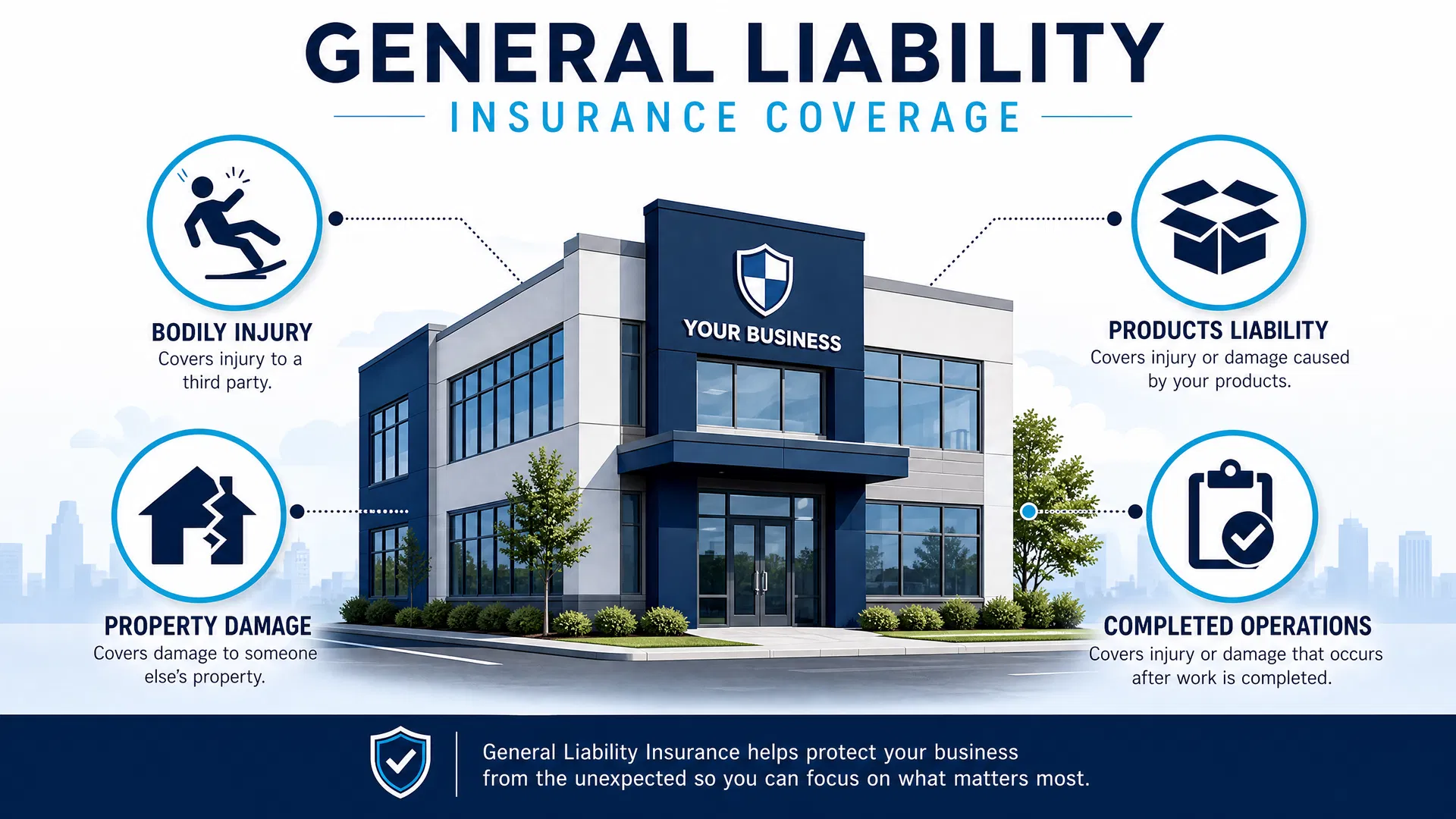
General liability policies typically include several key coverages:
- Bodily Injury: Covers medical expenses and legal fees if someone is injured on your business premises or due to your business operations.
- Property Damage: Covers damage to someone else's property caused by your business or employees.
- Personal and Advertising Injury: Covers claims of libel, slander, copyright infringement, and false advertising.
A common mistake business owners make is assuming that forming an LLC or corporation fully protects their personal assets from business liabilities. While these structures offer some protection, they do not shield you from all business risks, especially if you are personally negligent or if the business faces significant lawsuits [1]. General liability insurance acts as a crucial layer of protection beyond the corporate veil.
Another oversight is not understanding what GL insurance doesn't cover. For instance, it generally does not cover professional errors (which require professional liability insurance), damage to your own business property (covered by commercial property insurance), or auto accidents involving vehicles owned or leased by your business (covered by commercial auto insurance). For situations where employees use their personal vehicles for business, or you rent/borrow vehicles, Hired and Non-Owned Auto (HNOA) coverage can be added to a commercial auto policy or a Business Owner's Policy (BOP) [5] [6] [7].
| Coverage Type | What it Covers | What it Typically Doesn't Cover |
|---|---|---|
| Bodily Injury | Injuries to third parties on your premises or from your operations | Employee injuries (Workers' Comp), professional errors |
| Property Damage | Damage to third-party property caused by your business | Damage to your own business property (Commercial Property) |
| Personal & Advertising Injury | Libel, slander, copyright infringement, false advertising | Intentional criminal acts, contractual liability |
| Medical Payments | Small medical expenses for injuries on your premises, regardless of fault | Major medical expenses, employee injuries |
How This Applies in Florida and Licensed States
Ellie Insurance Group insures businesses nationwide. While general liability insurance is not a statewide mandate in Florida for all businesses, the need for it is pervasive due to contractual requirements. For example, many commercial landlords in Tampa and Brooksville, FL, will require their tenants to carry general liability insurance as a condition of their lease. Similarly, clients often demand proof of GL coverage before engaging a contractor or service provider.
It's important to note that state requirements for other types of insurance can vary significantly. For instance, if your business operates vehicles, Florida law mandates specific auto insurance coverages like Personal Injury Protection (PIP) and Property Damage Liability (PDL) for registered vehicles [2]. Workers' compensation insurance is also legally required for most Florida businesses with four or more employees, though specific rules apply to construction and agricultural industries.
Understanding these varying state and contractual obligations can be complex. Ellie Insurance Group's experienced agents can help you navigate the specific requirements for your business, ensuring you meet all necessary obligations and are adequately protected. For more detailed information on how general liability can protect your business, visit our General Liability Insurance page. We pride ourselves on helping businesses in Tampa, Brooksville, and across the nation find comprehensive and affordable insurance solutions.
When to Review Your Policy
Business insurance needs are not static; they evolve as your business grows and changes. It is highly recommended that business owners reassess their insurance policies, including general liability, at least once a year [1]. Key events that should trigger a policy review include:
- Business Growth: Expanding operations, hiring more employees, or increasing revenue can change your risk profile.
- New Services or Products: Introducing new offerings can expose your business to different types of liabilities.
- Changes in Location: Moving to a new office or opening additional locations can impact your coverage needs and local regulations.
- Contractual Changes: Entering into new client agreements or leases that have different insurance requirements.
- Industry Changes: Shifts in industry standards, regulations, or emerging risks.
Regular reviews ensure that your coverage remains adequate and cost-effective. An Ellie Insurance Group agent can assist you in this annual assessment, using our broad market access to shop on your behalf and find the best rates from our network of 100+ carriers. This proactive approach helps prevent gaps in coverage and ensures your business is always protected against unforeseen events.
Related Commercial Insurance Pages
- Commercial Property Insurance
- Workers' Compensation Insurance
- Professional Liability Insurance
- Commercial Auto Insurance
- Business Owner's Policy (BOP)
FAQs
Q: Is general liability insurance the same as a Business Owner's Policy (BOP)?
A: No, a Business Owner's Policy (BOP) combines general liability with commercial property insurance, offering a cost-effective package for small to medium-sized businesses. While GL covers third-party claims, a BOP extends protection to your business's own property.
Q: What is an 'additional insured' and why is it important?
A: An additional insured is a party added to your GL policy, often contractually required (e.g., by a landlord) 3. This extends some policy coverage to them for claims arising from your operations, differing from a certificate holder who only receives proof of insurance 4.
Q: Does general liability insurance cover my employees if they get injured?
A: No, employee injuries are covered by workers' compensation insurance, which provides medical benefits and wage replacement. Most states, including Florida, legally require businesses with employees to carry this coverage.
Q: What happens if I don't have general liability insurance and a claim occurs?
A: Without GL insurance, your business bears all costs for claims, including legal fees, settlements, and medical expenses. These substantial costs can lead to severe financial strain or business closure, a risk most businesses cannot afford.
Q: Can Ellie Insurance Group help me understand my specific general liability requirements?
A: Absolutely. Ellie Insurance Group helps businesses understand their unique insurance needs. Our agents assess operations, review contractual obligations, and clarify state requirements. We shop 100+ carrier markets for the most suitable and affordable General Liability Insurance page policy, ensuring comprehensive protection.
Instant Quote
Ready to secure the right protection for your business? Don't leave your assets vulnerable to unexpected claims. Get a comprehensive general liability insurance policy tailored to your needs. Click below for an Instant Quote and let Ellie Insurance Group help you find the best coverage at competitive rates.
References
Working with an independent agent
Coverage needs vary by operation, contract, and state. An Ellie Insurance Group agent can review your situation and shop 100++ carrier markets on your behalf — start an Instant Quote or call 813-582-5215.
Get a real quote
Want a quote for the coverage discussed here? Start with general liability, workers' compensation, or commercial auto — or browse all commercial coverages and industries we serve.
Written & reviewed by
Licensed Business Insurance Agent · Ellie Insurance Group
Licensed business insurance agent at Ellie Insurance Group · Access to 100+ carrier markets.
More about KevinIndependent Agency
100+ carrier markets
5.0★ Google Rating
Verified Google reviews
Trusted Choice 5.0
5-star independent agency
InsuredBetter 5.0
29 verified client reviews
Same-Day Certificates
For active clients during business hours
Instant Commercial Quotes
Most submissions, same business day
Keep reading
Related Articles

Coverage comparisons
General Liability vs Professional Liability Insurance
General Liability (GL) insurance primarily covers third-party bodily injury and property damage claims arising from your business operations, premises, or products. Professional Liability insurance, also known as Errors…
Coverage explainers
Does General Liability Cover Property Damage?
Yes, general liability insurance typically covers third-party property damage that your business causes during its operations. However, it does not cover damage to your own business property, which requires a separate…

Coverage comparisons
Additional Insured vs Certificate Holder: What Business Owners Should Know
An additional insured is an entity added to another's insurance policy, gaining direct coverage and protection under that policy, often required by contract [3]. A certificate holder, conversely, merely receives a…
Next step
Ready to shop commercial coverage?
Start an instant quote or speak with a commercial agent. We'll review available markets and the carrier's requirements before coverage can be bound.