Skip to main content
Monday–Friday · 9:00 AM – 5:00 PM ET·independent · Insuring businesses nationwide

Coverage explainers
Builders Risk Insurance Explained: Who Needs It and What It Covers
Builders risk insurance explained in plain English for contractors, developers, property owners, and real estate investors planning construction or renovation work.

Licensed Business Insurance Agent
8 min read
Key takeaway
Builders risk insurance helps protect a building or project while it is under construction, renovation, or major improvement.
Quick Answer: Builders risk insurance helps protect a building or project while it is under construction, renovation, or major improvement. It can cover materials, fixtures, and covered property at the jobsite, but the exact protection depends on the policy form, project values, location, timeline, and exclusions.
Before materials arrive or work begins, business owners should decide who is responsible for builders risk insurance. Ellie Insurance Group helps contractors, owners, and developers shop on your behalf shopping 100+ carrier markets for best rates and keep the process understandable.
What Business Owners Need to Know
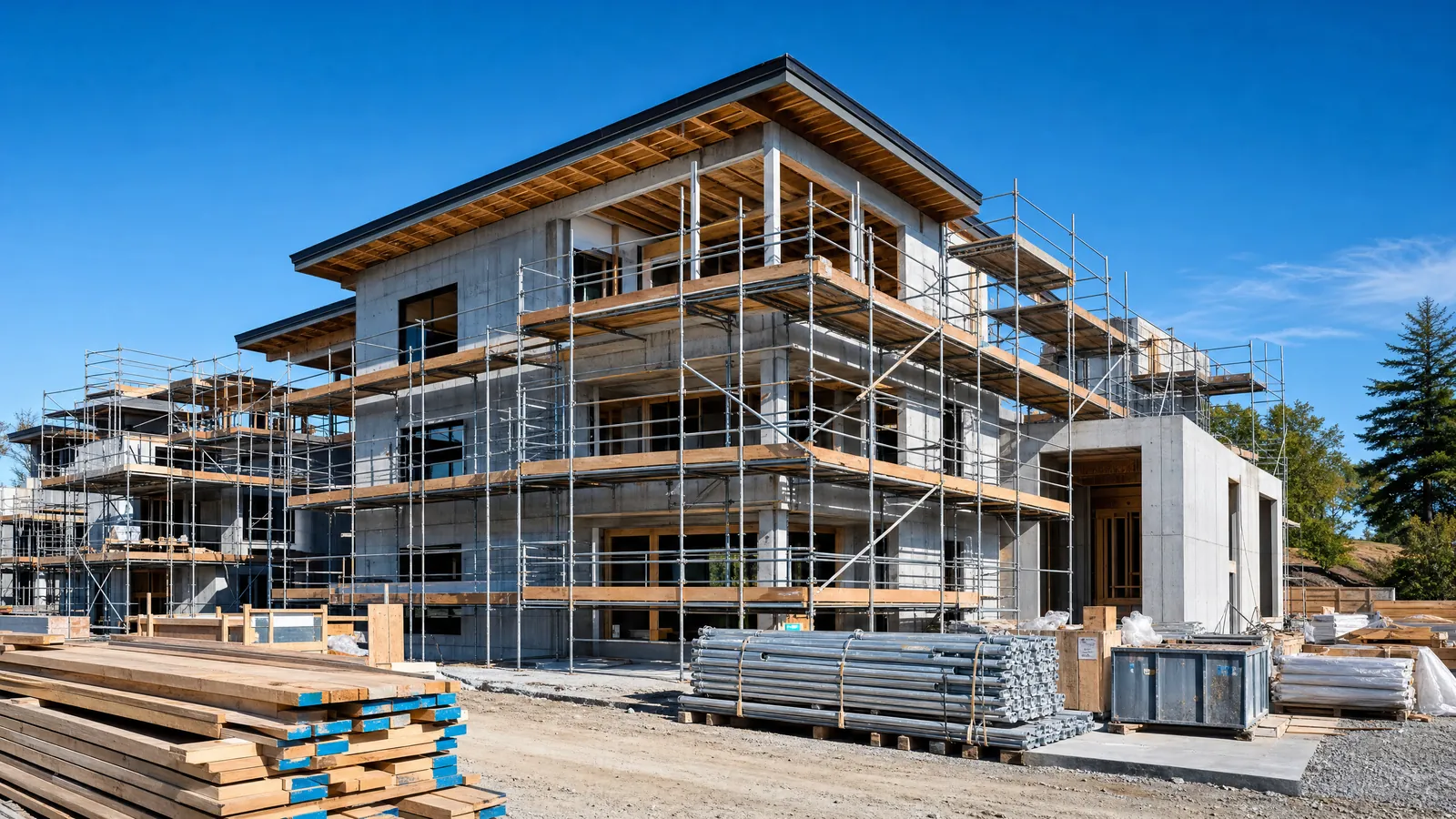
Builders risk is different from a standard property policy. A normal commercial property policy is usually built around a completed building with a stable occupancy. A builders risk policy is built around change. Walls are open, materials are exposed, values increase over time, crews come and go, and the project may not yet have permanent fire protection, doors, windows, or utilities. That changing risk is why builders risk exists.
The policy may be purchased by the property owner, general contractor, developer, lender requirement holder, or another party named in the construction contract. The right buyer depends on the contract and who has an insurable interest in the project. A homeowner doing a major renovation, a real estate investor performing a fix and flip, a developer building a small commercial structure, and a contractor constructing a custom home may all need builders risk, but their policy setup may look different.
Builders risk usually focuses on covered physical loss to covered property. That may include the structure under construction, materials and supplies intended to become part of the project, temporary structures, and sometimes materials stored offsite or in transit. Soft costs, ordinance or law, debris removal, testing, and delay-related expenses may be available by endorsement or policy design. These details should be discussed before work starts.
The most important timing rule is simple: arrange builders risk before the exposure begins. Once materials are onsite or demolition starts, carriers may be less flexible. If the project already has damage, a lapse, or work in progress with no coverage, underwriting can become harder. Insurance is not meant to be arranged after the first storm warning or theft incident.
Ellie Insurance Group insures businesses nationwide. The agency serves owners from Tampa and Brooksville, and represents 100+ carriers. That matters for builders risk because projects vary widely. The submission for a coastal renovation is not the same as the submission for a small inland buildout or a ground-up commercial project.
Coverage Details and Common Mistakes
A builders risk policy should be built around the full completed value of the project, not just the amount spent on day one. The project value can include labor, materials, overhead, and sometimes soft costs depending on the form. If the policy limit is too low, a major covered loss can leave the owner short. If the project timeline is too short, the policy may expire before completion. If the named insureds are incomplete, a party with responsibility may not be properly protected.
| Policy detail | Why it matters | Common mistake |
|---|---|---|
| Named insureds | Identifies who has coverage rights under the policy | Leaving out the owner, contractor, or lender when the contract requires them |
| Project value | Sets the limit basis for covered property | Insuring only the current amount spent instead of the completed value |
| Covered property | Defines structures, materials, fixtures, and temporary works | Assuming all tools, equipment, and existing structures are included |
| Offsite storage | Addresses materials stored away from the jobsite | Ordering expensive materials before confirming storage coverage |
| Transit | Addresses materials moving to the project | Assuming vendor or carrier coverage is enough |
| Soft costs | Can address certain additional expenses after delay | Forgetting loan interest, taxes, permits, or professional fees may be limited |
| Policy term | Matches the construction timeline | Letting the policy expire before final completion or occupancy |
A common mistake is assuming general liability covers the project itself. General liability may respond to third-party injury or property damage claims, but it usually is not designed to cover the value of the work under construction. If a fire damages the partially completed structure, a theft removes installed materials, or a storm damages covered project property, builders risk is the policy owners look to first.
Another mistake is forgetting existing structures. Renovation projects are different from ground-up projects because part of the building already exists. Some builders risk forms focus on the new work and may limit or exclude the existing structure unless it is specifically addressed. A property owner renovating a restaurant, office, rental home, or warehouse should be clear about what is existing, what is new, and whether the project involves structural changes.
Business owners also forget that builders risk is not a maintenance contract. Policies contain exclusions and conditions. Common issues can include wear and tear, faulty workmanship, design defects, employee theft, flood, earth movement, testing, mechanical breakdown, and certain weather limitations, depending on the form. Some exclusions can be modified or partially addressed, and some cannot. The important step is reading the policy before relying on it.
Contracts can add another layer. A lender may require evidence of builders risk before releasing funds. A project owner may require the contractor to carry it. A general contractor may assume the owner has arranged it. Those assumptions create gaps. The contract should identify who buys the policy, who is named, what limit is required, whether soft costs are included, and when coverage starts and ends.
When Ellie Insurance Group reviews builders risk insurance, the goal is to gather practical information: project address, type of construction, completed value, start and end dates, contractor details, security, prior losses, distance to coast, protection class, occupancy plans, and whether materials will be stored offsite or transported. Clear details help the agency shop on your behalf more effectively.
How This Applies in Florida and Licensed States
Florida builders risk deserves extra attention because weather, coastal exposure, theft, and construction timelines can affect underwriting. A project in Tampa Bay, Brooksville, Fort Myers, Miami, Jacksonville, or the Panhandle may be viewed differently based on distance to coast, wind exposure, flood zone, building type, roof system, and protection features. Wind, flood, and named storm details should be discussed directly rather than assumed.
Builders risk also connects to contractor licensing and workers' compensation requirements, but it does not replace them. Florida DBPR explains that many contractor categories require registration or certification, and Florida DFS explains that construction employers with one or more employees must carry workers' compensation coverage.[1][2] A project can need licensed contractors, workers' compensation, general liability, and builders risk at the same time because each requirement solves a different problem.
For work in other licensed states, the same principle applies: the project location controls many practical questions. Local building codes, lender requirements, contract wording, wind or hail exposure, earthquake exposure, wildfire exposure, and state-specific construction rules can all affect the insurance plan. Tell your agent where the project is, not just where your company is based.
Related coverage
Builders Risk Insurance
Course-of-construction coverage for buildings, materials, and equipment on the jobsite.
When to Review Your Policy
Review builders risk before contracts are signed, before financing closes, and before materials are ordered. The best time is when the project budget and timeline are known but before the jobsite is exposed. If the project changes, review again. Larger scope, higher material costs, delayed completion, change orders, new lenders, and added offsite storage can all require updates.
You should also review the policy before the project moves from construction to occupancy. Builders risk is temporary. Once the project is complete, sold, rented, or occupied, a different property policy may be needed. Do not wait until the builders risk policy expires to plan the permanent insurance.
Finally, review coverage after any loss, even if the project continues. A partial loss can affect the remaining limit, project timeline, lender requirements, and soft cost exposure. Your agent can help coordinate next steps with the carrier and discuss whether extensions or changes are needed.
Related Commercial Insurance Pages
| Page | Why it may matter |
|---|---|
| Contractor Insurance | Helps coordinate liability, workers' compensation, auto, and equipment needs for contractors. |
| Contractors Equipment Insurance | Helps protect tools and mobile equipment that builders risk may not cover. |
| Commercial Property Insurance | Helps transition from construction coverage to completed-building protection. |
| General Liability Insurance | Helps address third-party injury and property damage claims. |
| Commercial Umbrella Insurance | May provide additional liability limits above eligible underlying policies. |
FAQs
Who should buy builders risk insurance?
The contract should say who buys it. It may be the owner, contractor, developer, or another party with an insurable interest. The important point is that the responsible parties should be named correctly.
Does builders risk cover contractor tools?
Not usually in the way contractors expect. Tools and mobile equipment are often better addressed with contractors equipment insurance. Builders risk usually focuses on the project property.
When should coverage start?
Coverage should be arranged before materials arrive and before work begins. Waiting until construction is underway can create underwriting problems and potential gaps.
Does builders risk cover renovation projects?
It can, but renovations need careful setup because the existing structure may need to be addressed. The policy should distinguish existing property from new work and materials.
What happens when the project is complete?
Builders risk is temporary. When the project is complete, sold, rented, or occupied, the owner should transition to the appropriate permanent property policy.
Instant Quote
Builders risk works best when it is arranged before the project is exposed. Ellie Insurance Group can help organize project details, review the timeline, and shop on your behalf through 100+ carriers. Start with builders risk insurance and choose Instant Quote.
Sources
Working with an independent agent
Coverage needs vary by operation, contract, and state. An Ellie Insurance Group agent can review your situation and shop 100++ carrier markets on your behalf — start an Instant Quote or call 813-582-5215.
Get a real quote
Want a quote for the coverage discussed here? Start with general liability, workers' compensation, or commercial auto — or browse all commercial coverages and industries we serve.
Written & reviewed by
Licensed Business Insurance Agent · Ellie Insurance Group
Licensed business insurance agent at Ellie Insurance Group · Access to 100+ carrier markets.
More about KevinIndependent Agency
100+ carrier markets
5.0★ Google Rating
Verified Google reviews
Trusted Choice 5.0
5-star independent agency
InsuredBetter 5.0
29 verified client reviews
Same-Day Certificates
For active clients during business hours
Instant Commercial Quotes
Most submissions, same business day
Keep reading
Related Articles

Compliance & renewals
7 Certificate of Insurance Mistakes That Get Contractors Booted Off Jobs
Most certificate of insurance (COI) rejections come from a short list of fixable errors — blanket additional insured wording where a specific named endorsement is required, a missing waiver of subrogation, no primary…
Industry guides
Contractors Equipment Insurance: What It Covers and Why You Need It
Contractors equipment insurance helps protect the tools, machinery, and mobile equipment your business relies on at jobsites, in transit, and in storage. It is often written as inland marine coverage because contractor…
State requirements
Florida Contractor Insurance Requirements: License, GL, Workers' Comp, and Bond Rules
Florida contractor insurance requirements usually involve a mix of licensing rules, general liability, workers' compensation, certificates of insurance, and sometimes bond requirements. The exact checklist depends on…
Next step
Ready to shop commercial coverage?
Start an instant quote or speak with a commercial agent. We'll review available markets and the carrier's requirements before coverage can be bound.